
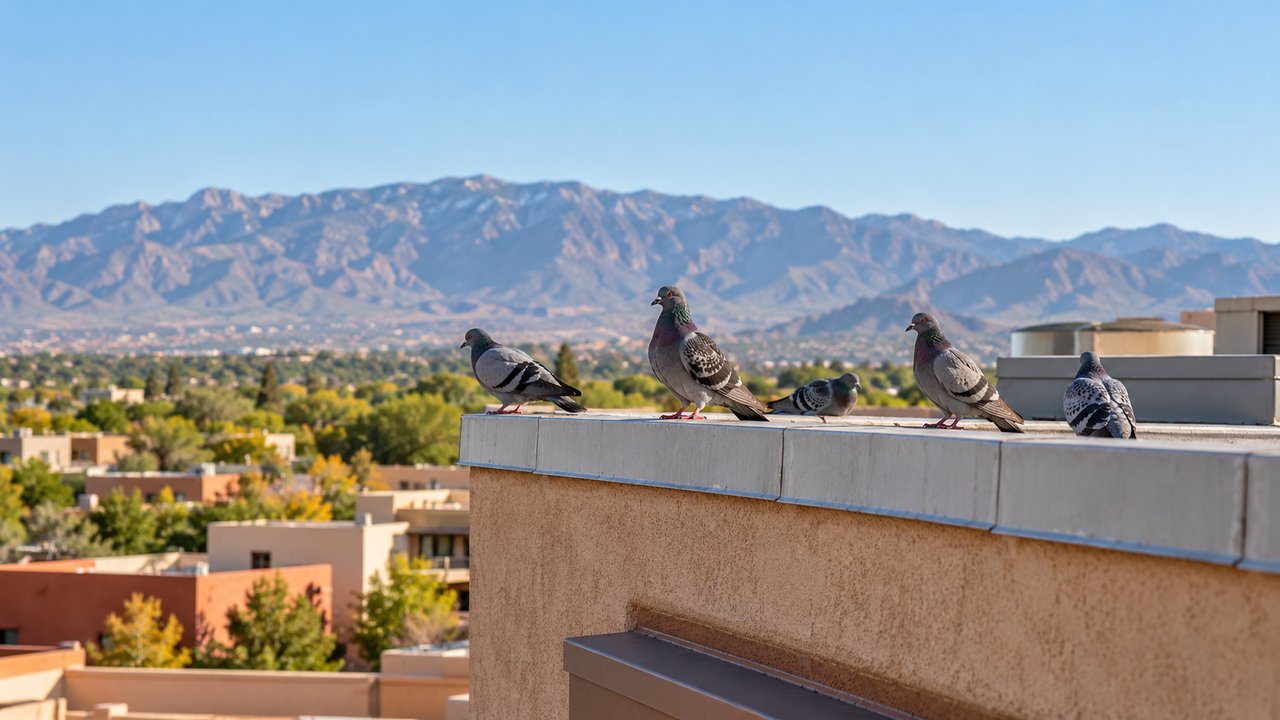
Identify the bird before planning work
Birds are not all treated alike.
Species, active nests, eggs, and applicable protections can affect what work is appropriate and when it can occur.
A nuisance complaint does not remove those requirements.
Assessment should identify the location and activity without promising indiscriminate removal.
Observe from the ground or another safe place.
Do not disturb nests, climb onto a roof, or handle birds to prepare for a call.
Focus on access and roosting conditions
Bird management may involve appropriate exclusion, deterrents, and recommendations for reducing attractive conditions.
The method must fit the building and species.
Ledges, signs, canopies, roof equipment, and solar-related structures can create different installation requirements.
Materials, maintenance access, and drainage should be considered.
Cleanup and repair may require a separate scope.
A deterrent installation is not automatically a contamination-removal or building-maintenance service.
Plan work around the property
Explain the affected areas, height, access restrictions, and pedestrian use.
Managers may need to coordinate roof access and temporary restrictions.
Do not dry sweep accumulated droppings or disturb heavily contaminated materials.
Ask about appropriate cleanup precautions and professional assistance.
For commercial sites, discuss equipment access, food areas, and operating hours.
Work should not block necessary ventilation, drainage, or maintenance routes.
Inspect and maintain exclusion
An installed system may require checks for damage, debris, or new activity.
The plan should explain owner maintenance and when to request service.
Birds may use another part of a property if the attractive conditions remain.
Food sources, waste, and shelter should be considered alongside the installation.
We do not promise that every bird will leave the surrounding area.
The scope concerns the identified property problem and legally appropriate methods.
Match the system to the affected structure
Birds using a canopy, roof equipment, or a sign may create different installation needs.
Describe the repeated location, height, and way the area is used by people and maintenance staff.
Species identification and any active nest must be considered before intervention.
A visible accumulation of material is not automatic permission to disturb it.
An exclusion or deterrent system should preserve ventilation, drainage, and safe maintenance access.
Building-specific details matter more than a generic device photograph.
Discuss who inspects the system after installation and what signs of damage or renewed activity should be reported.
Maintenance expectations belong in the proposed scope.
Contamination cleanup, repairs, and equipment access may need their own arrangements.
Call with the property context so the response can address the actual roosting problem rather than promise removal of all birds nearby.