
Inspection
Assess accessible evidence and explain limits.
State formal reporting requirements before booking.
Termite activity can remain out of sight while the signs appear around wood, walls, or foundation edges.
Our termite control in Albuquerque helps you investigate concerns and understand inspection, treatment, and monitoring options.
Call (505) 112-7788Open 24/7 · Albuquerque, NM
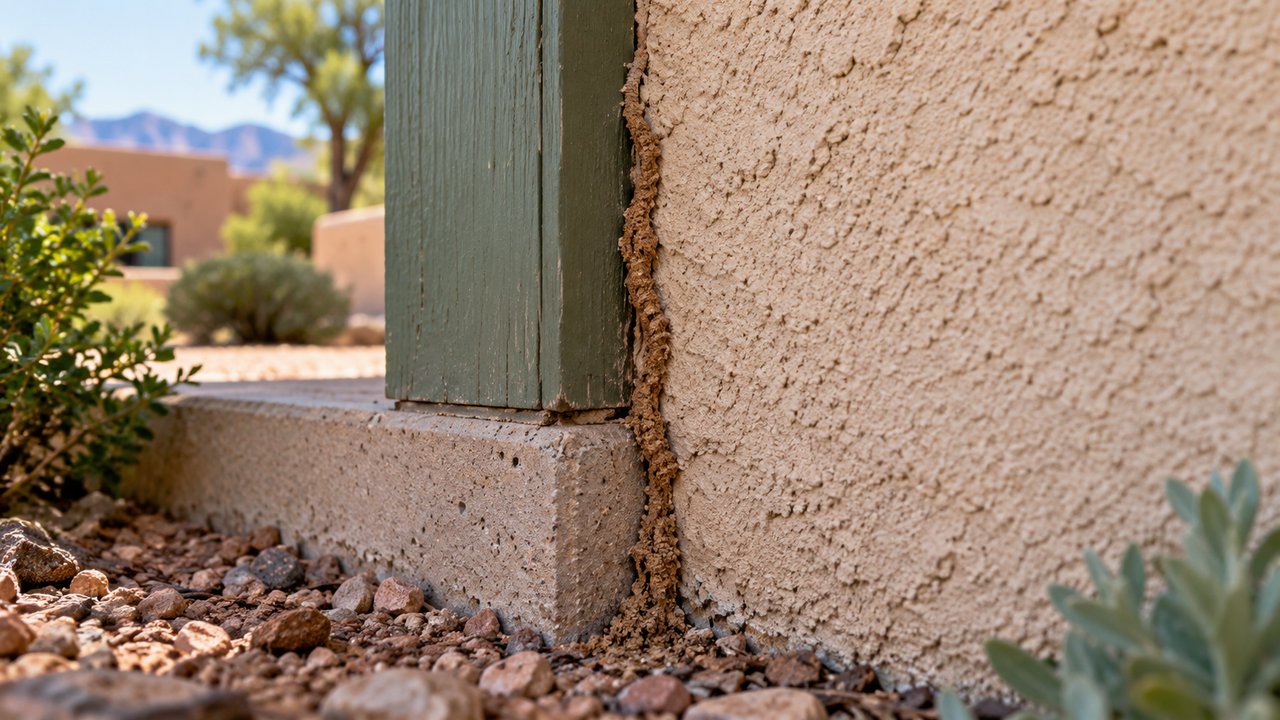
These are clues to discuss, not a diagnosis.
Share where activity appears and whether it has returned after previous work.
Assess accessible evidence and explain limits.
State formal reporting requirements before booking.
Compare options for the identified termite, construction, and access conditions.
Discuss follow-up separately from damage repair and moisture or construction maintenance.
Termites are not the only cause of damaged wood.
Moisture, decay, ants, and other wood-associated insects can leave clues that need a qualified assessment.
Visible mud tubes, swarmers, discarded wings, and changes in wood can justify an inspection.
A lack of obvious signs does not prove a structure is free of activity.
Take photographs and keep accessible evidence undisturbed where practical.
Do not open walls or apply a retail product before discussing the assessment.
Termite inspection considers visible activity, property construction, soil or wood contact, moisture, and accessible areas.
Concealed spaces may remain outside a visual inspection.
Tell us about additions, previous treatments, crawl-space access, known leaks, and any documents from earlier work.
These details can help shape the assessment.
A treatment assessment and a formal wood-destroying-organism report are different requests.
If you need documents for a transaction or lender, state that before booking so requirements can be confirmed.
Treatment options depend on the identified termite, building conditions, access, and product requirements.
Appropriate options may include soil treatment, bait systems, localized work, and ongoing monitoring.
There is no single product or installation that fits every structure.
The proposed scope should explain what areas are covered and what disruption or access is expected.
Repairing damaged materials is separate from treating activity.
Structural questions may require a builder, engineer, or other appropriate professional.
Ask how follow-up is organized and what new signs you should report.
Continued observation is important where treatment effects or concealed activity need evaluation.
Water management, wood-to-soil contact, stored materials, and building changes can affect future risk.
Recommendations should be specific to the findings.
Guarantee terms, renewal charges, and repair coverage must be stated in the actual agreement.
We do not publish a lifetime protection or damage-payment promise without supporting terms.
If your concern is a suspicious tube beside the foundation, describe the exact location and keep a photograph.
If your concern is a transaction document, explain the required report and recipient before arranging the appointment.
Previous treatment records can change the assessment questions.
Share the date, method if known, and any ongoing agreement without assuming that old work still provides current coverage.
Construction changes may create access limits or new conditions.
Tell us about additions, enclosed patios, altered drainage, and repairs around the affected area.
When a treatment is proposed, ask how it reaches the identified activity and what monitoring is expected.
The answer should relate to your building rather than a generic product claim.
Keep inspection and service documents for future reference.
If you notice new evidence after work, report its location and date so the follow-up can distinguish fresh activity from existing damage.
The right quote begins with the property and the problem.
Extent of activity, affected areas, construction, access, treatment method, and required visits can change the work.
Ask which inspection areas, treatments, monitoring, and follow-up are included.
Additional services should be discussed before they are assumed to be part of the price.
Building repairs, specialist cleanup, waste removal, formal reports, and other contractor work may need separate arrangements.
Concealed spaces or difficult access may also limit the initial scope.
Tell us what you need before booking.
We will discuss the proposed service and appointment availability without inventing a fixed price, arrival time, or universal guarantee.
Preparation is specific to the chosen work.
Explain whether the property has children, pets, aquariums, sensitive spaces, occupied units, or business operations that need coordination.
Follow the actual product and method instructions for access, cleaning, protection of belongings, and re-entry.
Do not replace those directions with a generic waiting period from another website.
Our approach is to make the questions and scope understandable.
Discuss the evidence and options.
Agree who handles the treatment, maintenance, and any separately quoted work.
We cover the 19 ZIP codes listed on our service-area page.
Call with the full property address and any controlled-access requirements.
Open 24/7 means the business can be contacted around your schedule.
The appointment, entry arrangements, and work must still be confirmed directly.
View service coverage ↗Wings are useful evidence, but winged ants and other insects can be confused with termites.
Have the evidence assessed.
Explain the report and recipient requirements when you call.
Formal reporting scope and applicable qualifications must be confirmed before booking.
No.
Pest treatment and building repair are separate scopes.
Ask what work is included and who should assess structural concerns.
Tell us the pest, the property, and where activity appears.
We’ll discuss the next step and appointment availability.
Call (505) 112-7788