
Understand where rodents are active
Droppings and damage show where to investigate, but they do not establish the entire extent of an infestation.
Accessible interiors, exteriors, and connecting spaces may need assessment.
Rats, mice, and pack rats differ in behavior and the places they use.
Identifying the activity helps determine the control approach and monitoring locations.
Tell us about sounds, sightings, food storage, and recent building changes.
Do not enter a hazardous roof space or disturb a nest to collect evidence.
Removal and exclusion work together
Rodent control may include appropriate traps or other methods, monitoring, and recommendations for reducing food and shelter.
Methods and placement depend on the site and exposure risks.
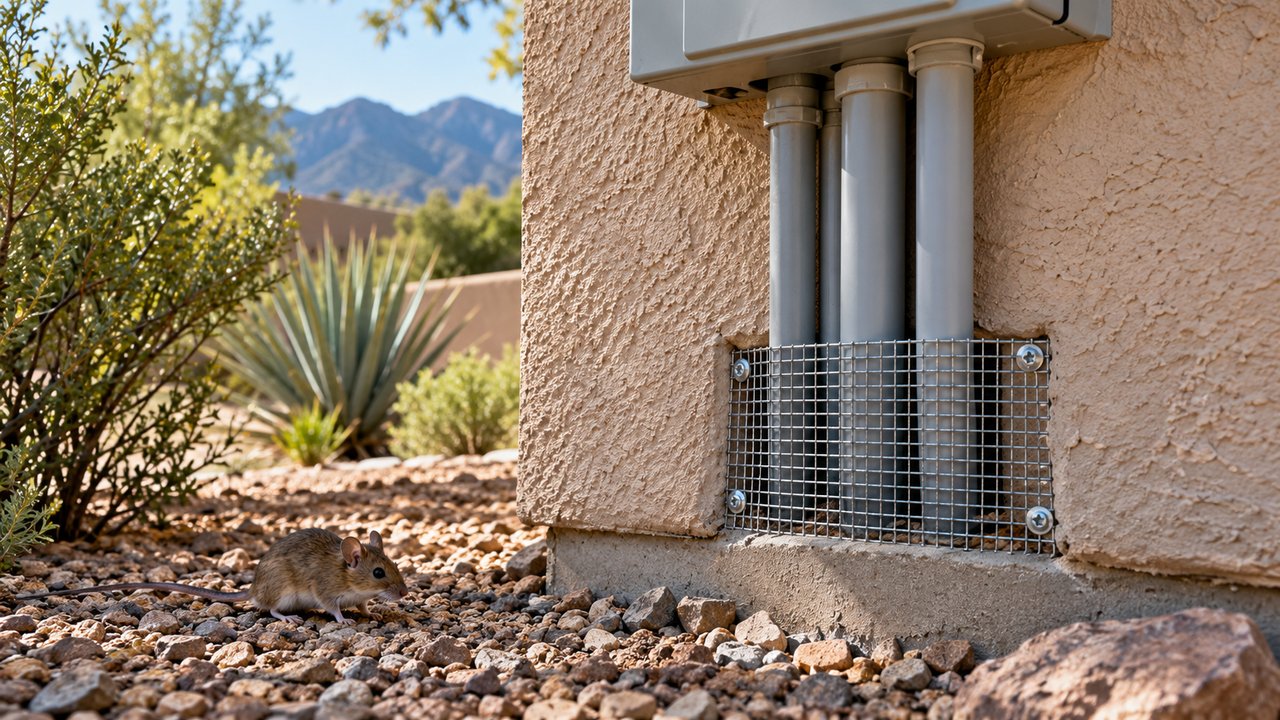
Exclusion addresses the openings that allow access.
Thresholds, vents, utility penetrations, roof edges, and other gaps may require different materials and workmanship.
Sealing an occupied space without a plan can create further problems.
Control, access assessment, and repairs need to be coordinated rather than performed in isolation.
Keep cleanup separate from control
Do not dry sweep or vacuum suspected rodent waste.
CDC guidance recommends wet disinfection precautions; contaminated insulation, heavy infestations, or inaccessible areas can need specialist assistance.
The treatment quote should explain whether cleanup, disposal, odor work, insulation replacement, or building repair is included.
These are not automatic parts of rodent control.
Protect household members and pets from control devices.
Follow the placement and access instructions, and report any device damage or unexpected contact.
Reduce opportunities for another visit
Seal food and animal feed, manage waste, and reduce accessible nesting material.
Inspect new deliveries or storage areas when activity has been observed.
Exclusion is not simply filling a gap with any available foam.
Material choice, the size of the opening, and access needs matter.
Monitoring after control helps establish whether activity continues.
New droppings, fresh gnawing, or sounds should be reported with the location and timing.
From a sighting to an exclusion plan
A mouse in a garage may lead to inspection of food storage and ordinary threshold gaps.
Repeated sounds above a ceiling can require a different access discussion and assessment of occupied spaces.
Tell us whether the evidence is fresh, where it first appeared, and whether repairs have already been attempted.
Earlier sealing may have changed the routes or limited access to the original opening.
The control plan should identify monitoring responsibilities and how devices are kept secure.
Report moved, damaged, or inaccessible equipment instead of relocating it yourself.
Exclusion recommendations should explain the repair location and whether ordinary maintenance, roof work, or another trade is needed.
A visual inspection cannot reveal every concealed route.
Cleanup timing and disposal should be coordinated separately where relevant.
This gives you a practical sequence: understand activity, arrange appropriate control, address access, and assess whether new evidence remains.