
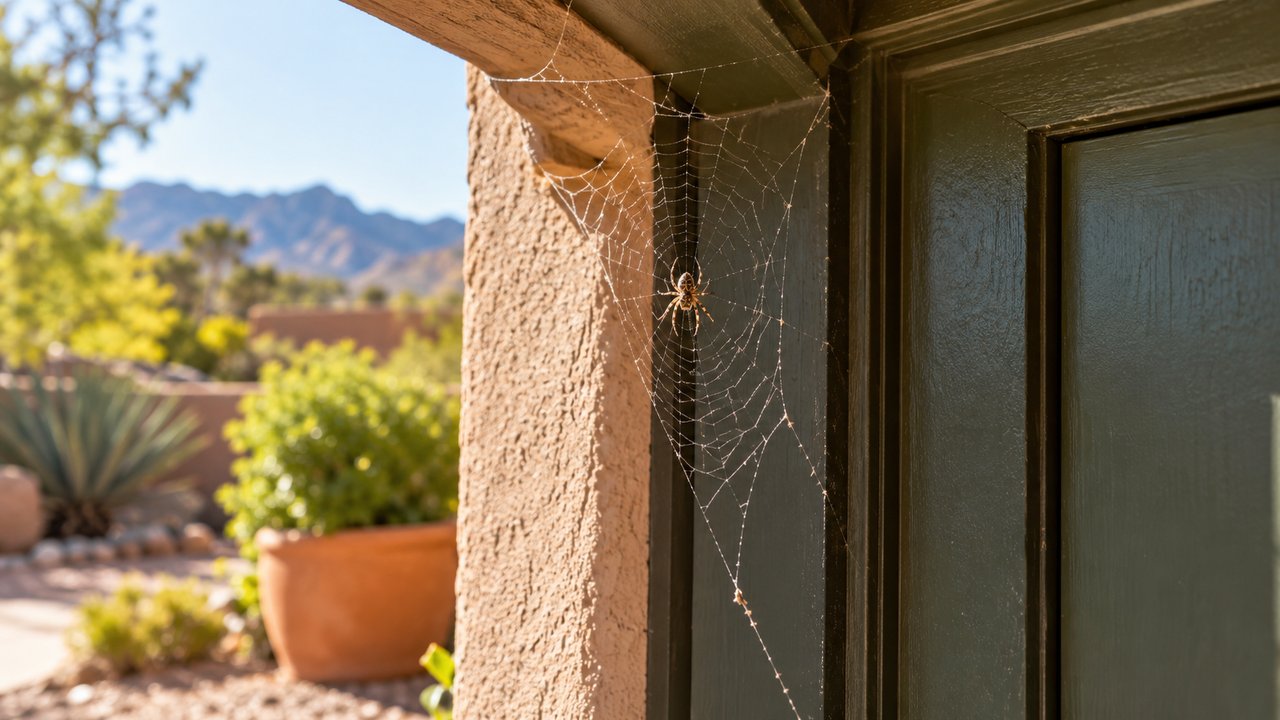
Identification helps set priorities
Not every spider presents the same concern, and many outdoor spiders play a useful role.
The location, pattern, and identified species influence the response.
A photograph taken from a safe distance can help the discussion.
Do not handle an unfamiliar spider or enter an unsafe space to capture it.
A skin mark alone cannot establish a spider bite.
Medical symptoms belong with a healthcare professional rather than a remote pest diagnosis.
Look at prey and shelter together
Spider activity can be associated with other insects, protected corners, stored items, and exterior lighting.
Simply removing a web may leave those conditions unchanged.
Service may include inspection, appropriate targeted treatment, web-related management, and recommendations for reducing insect activity or access.
Outdoor eaves and high spaces may require particular access equipment.
Tell us about height, obstacles, pets, and areas where routine work is restricted.
Prepare storage and entry areas
Provide access to the affected locations without reaching into hidden corners.
Wear appropriate protection for ordinary housekeeping, and seek assistance where an identified hazard is suspected.
Tell us about recent sprays and the places where activity is most frequent.
A nighttime exterior issue and a repeated indoor issue may need different investigation.
Treatment precautions depend on the selected products and locations.
Follow the actual instructions for household members, pets, and re-entry.
Reduce repeat activity
Screens, door sweeps, clutter management, and attention to insect-attracting conditions can support control.
Recommended work should relate to the inspection.
Report new webs or sightings with their location.
Some exterior recolonization can occur; a plan should explain monitoring and follow-up rather than promise a spider-free yard.
Ask whether underlying insect activity belongs in general pest treatment.
Coordinating related services may be more useful than treating each visible web as a separate problem.
Give the recurring location attention
If webs keep returning around an exterior light, share the insect activity and lighting context.
If spiders repeatedly appear inside stored boxes, explain the storage conditions and access.
Avoid assuming every spider is a dangerous species.
Identification and the area where it is found are more useful than a dramatic description.
Web removal and control of related insect activity may be part of the discussion.
The proposed work should explain which accessible spaces can be reached and which need different equipment.
Keep routine storage accessible without reaching into concealed corners.
Where you suspect a hazardous species, leave the investigation to an appropriate professional.
Following service, note whether activity returns to the same site or appears somewhere new.
This helps connect treatment with entry routes, shelter, and prey rather than repeat work without a clearer picture.