
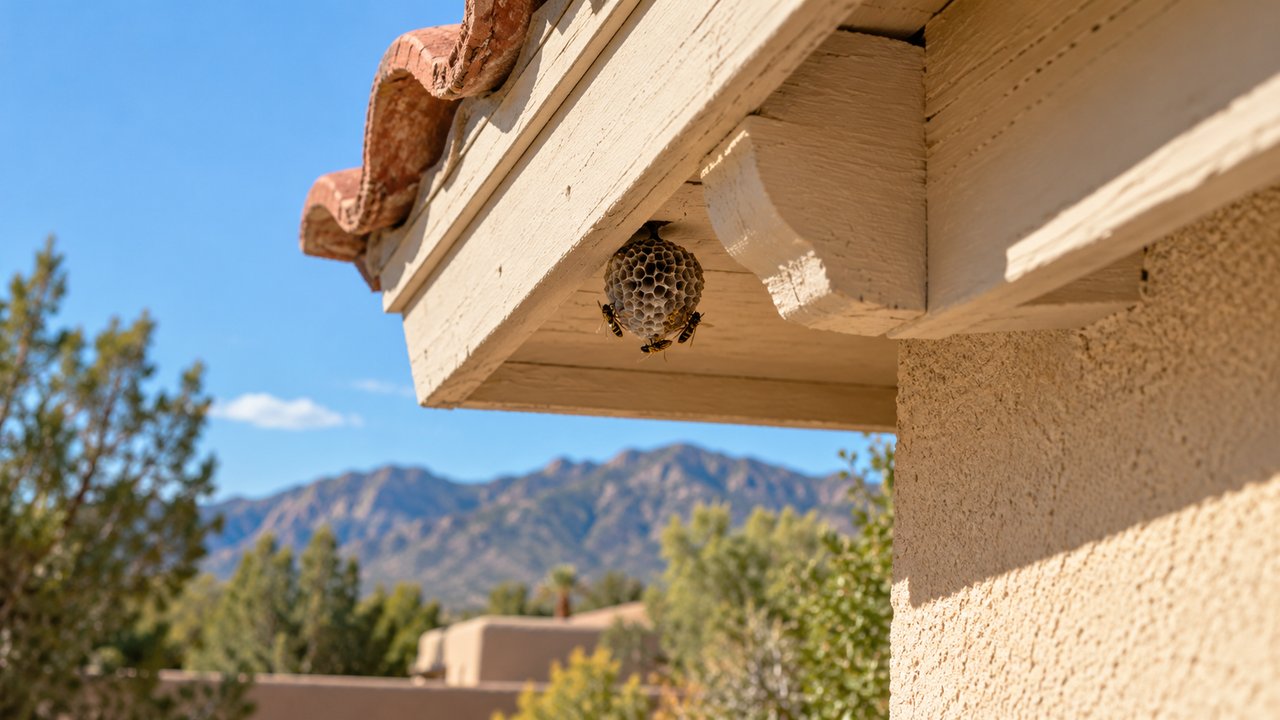
Identify the insect and nesting location
Wasps, yellowjackets, bees, and other flying insects can be confused.
Correct identification helps determine the method and any specialist or protected-species considerations.
A visible paper nest is different from activity entering a wall void or ground opening.
Concealed activity needs assessment rather than an assumption about the nest size.
Observe from a safe distance.
Do not block an active entrance, disturb the nest, or attempt removal from a ladder.
Define access and treatment scope
Service may include inspection, appropriate nest treatment, accessible removal where suitable, and follow-up guidance.
Height, concealment, electrical fixtures, and occupied areas affect the work.
Wall openings, building repairs, and inaccessible nests may require a separate scope.
The quote should explain what can be reached and what remains outside the planned work.
A bee colony may need a different response from a wasp nest.
We will discuss identification and the appropriate next step rather than apply a blanket removal promise.
Keep people away from the active area
Tell household members or site staff about the location and limit access while arrangements are made.
Pets can also disturb nesting areas.
Share any known allergy concerns and the way the space is used.
Treatment timing and precautions must be confirmed for the actual method.
For a business entrance or communal walkway, coordinate access with the responsible manager.
Do not rely on a website statement as a guarantee that the area is safe.
Watch for new nest activity
After work, follow instructions on observation and access.
Activity and follow-up requirements vary with the nest and method.
New nesting can occur in other locations.
Inspect routine-use areas from a safe position and report repeated traffic rather than searching inside a structure.
If a sting causes an allergic response or serious symptoms, seek medical help.
Nest service is a property treatment, not emergency healthcare.
Describe the nest without approaching it
A nest visible beneath a low eave and traffic entering a roof gap call for different assessment.
Explain what can be seen from a safe distance, the height, and nearby occupied areas.
Do not insert objects, cover an entrance, or use a ladder to examine the nest.
The access and method should be planned before disturbance.
For a shop entrance, patio, or shared walkway, nominate a contact who can coordinate restrictions and advise others about the location.
Household pets may also need to stay away.
Treatment and accessible nest removal are separate parts of the scope.
Ask whether building opening, concealed material, or subsequent repairs need another arrangement.
Follow observation instructions after work and report continued traffic.
If insects are bees or another species requiring a different response, identification should guide the next step rather than the original service label.