
Bites alone do not identify an infestation
Skin responses have many possible causes.
Bed bug assessment relies on physical evidence and inspection rather than a description of bites alone.
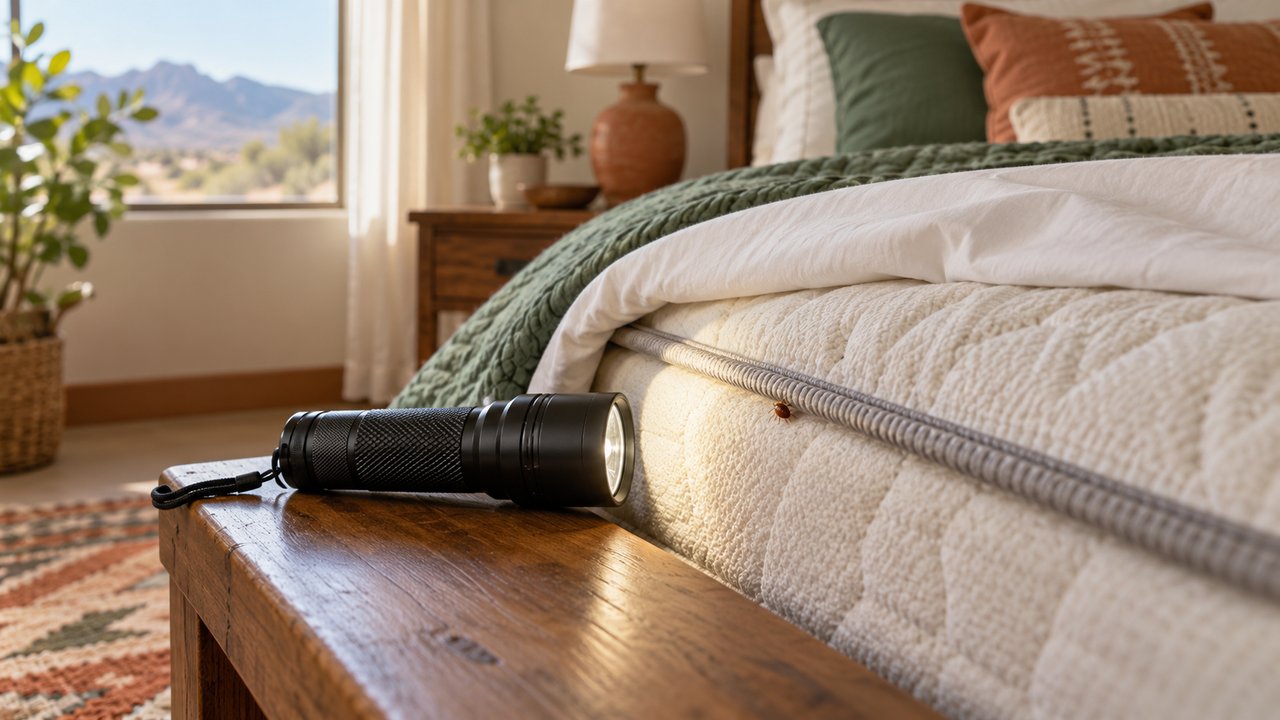
Mattress seams, bed frames, nearby furniture, and protected cracks may hold evidence.
The affected area can extend beyond the bed.
Photograph insects or spotting without moving belongings into another room.
If a specimen can be kept securely without contact, it may assist identification; do not take risks to collect one.
Choose the method after inspection
We offer bed bug treatment, including heat and other appropriate options.
The choice depends on infestation extent, property layout, item limitations, access, and preparation.
Whole-room or structural heat treatment requires controlled equipment, monitoring, and professional planning.
It is not the same as using a household heater or leaving belongings in a hot car.
Methods may be combined with monitoring, physical removal, encasements, or other steps where appropriate.
The proposal should explain follow-up and treatment limitations.
Preparation is part of the service plan
Follow the preparation checklist supplied for your actual method.
Heat-sensitive items, laundry, clutter, electronics, pets, plants, and belongings may need different handling.
Bagging and moving items should prevent spread rather than relocate the problem.
Do not discard furniture automatically.
Ask about treatment options and appropriate disposal if needed.
In multifamily buildings, notify the responsible manager and coordinate assessment of relevant adjoining spaces.
Treating one occupied room without access coordination can leave important routes unexamined.
Use follow-up evidence rather than guesswork
Treatment does not guarantee that every symptom stops immediately.
Physical evidence, monitoring, and scheduled follow-up are more useful than judging the result from skin responses alone.
Report newly observed insects with dates and locations.
Do not add foggers, extra sprays, or homemade heat methods between visits without discussing them.
Travel habits, incoming furniture, and neighboring activity may influence future exposure.
Prevention guidance supports the treatment but cannot promise permanent eradication.
Organize treatment around the occupied rooms
A sleeping-area concern needs information about all relevant furniture and nearby spaces.
Describe whether physical evidence has been found in one room or several, and whether adjacent units have reported activity.
Heat treatment and targeted product applications have different preparation needs.
Ask which belongings stay, which items need protection, and how removed items will be kept from spreading suspected activity.
For managed properties, nominate one contact to arrange access and communicate the checklist.
Occupant preparation is an important part of the plan.
Monitoring should use physical findings and the agreed follow-up.
An itch or a disturbed night does not prove that treatment failed, just as one quiet night does not establish that every affected area is clear.
Call before discarding expensive furnishings.
A treatment assessment can help you understand options and, if disposal is needed, how to handle the item without creating another exposure route.