
Identify
Establish the weed or pest and distinguish other causes of plant or turf decline.
Patchy turf or damaged foliage does not automatically mean insects are the cause.
Our lawn and ornamental pest control in Albuquerque starts with evidence so pest treatment can be separated from watering, soil, and plant-health problems.
Call (505) 112-7788Open 24/7 · Albuquerque, NM
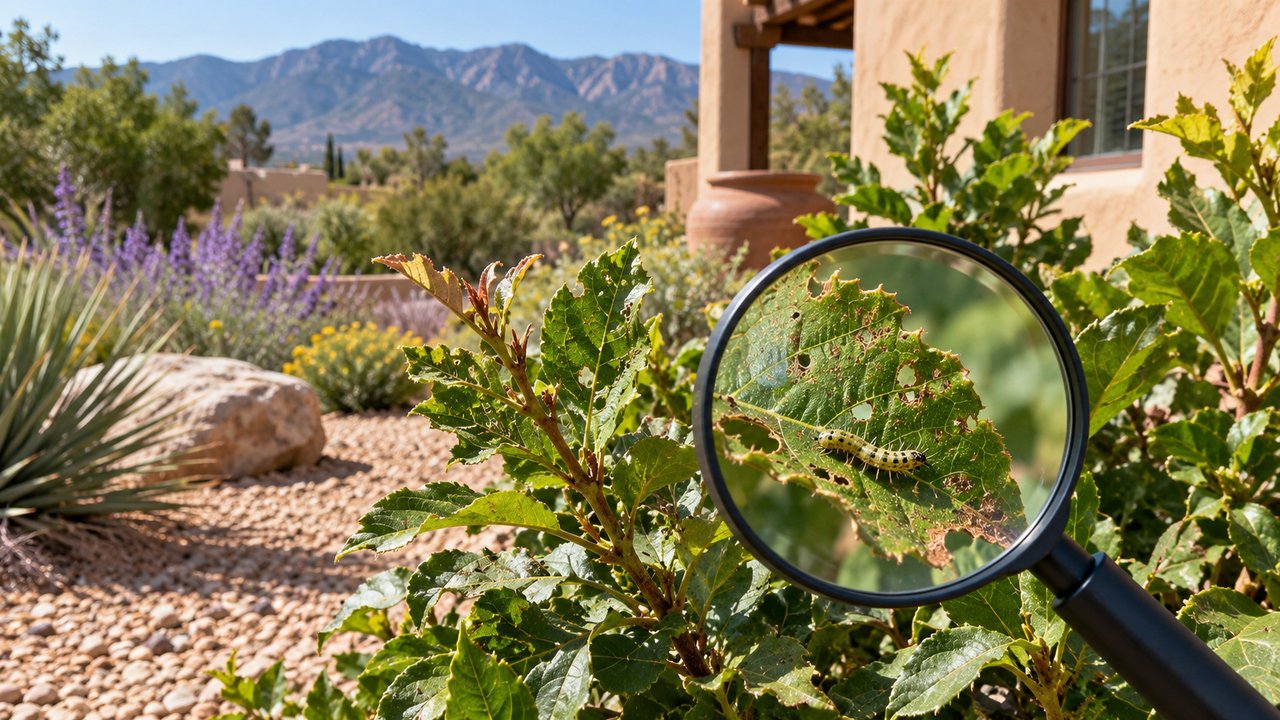
These are clues to discuss, not a diagnosis.
Share where activity appears and whether it has returned after previous work.
Establish the weed or pest and distinguish other causes of plant or turf decline.
Consider growth stage, site, desirable plants, timing, and product permissions.
Look for fresh activity or emergence and coordinate appropriate landscape maintenance.
Water stress, drainage, disease, soil conditions, and physical injury can resemble pest damage.
Treatment should not be selected solely because a lawn is brown.
Plant type, the pattern of damage, visible insects, and timing can help identify the problem.
Photographs of the whole plant and close details are useful.
Tell us about irrigation, recent fertilizer or pesticide use, and changes in growth.
If the cause falls outside pest management, plant or irrigation expertise may be needed.
Supported services include assessment of grubs, borers, beetles, grasshoppers, and other relevant landscape pests.
Treatment suitability depends on identification and the stage that can be reached.
A leaf-feeding insect and a pest within woody tissue need different approaches.
Timing, plant condition, product permissions, and access affect the options.
Beneficial insects and non-target plants should be considered.
The scope should avoid turning every insect found outdoors into a treatment target.
Identify affected plants and the areas where damage has progressed.
Share watering schedules, access restrictions, pets, ponds, and edible plantings.
Do not cut into trunks or disturb soil extensively to collect evidence.
Follow the inspection and preparation guidance for the actual concern.
Application and re-entry conditions depend on the selected method.
Watering restrictions or instructions must come from the product and service directions.
Pest control does not guarantee that existing damage disappears.
Plant recovery depends on health, extent of injury, growing conditions, and suitable care.
Monitoring should look at fresh damage and continuing activity rather than old marks alone.
Keep photographs to compare changes over time.
Irrigation repair, pruning, soil correction, replacement planting, and lawn renovation may be separate services.
Ask which recommendations fall inside the proposed pest work.
Photograph the whole plant or turf area as well as the damaged detail.
This helps distinguish an isolated injury from a pattern across the landscape.
Share the plant name if known, irrigation routine, and recent applications.
Insect activity may be only one part of the condition, and treatment timing depends on what is identified.
Ask whether the proposed method reaches the relevant pest stage.
An insect feeding openly on foliage presents different options from a pest protected inside plant tissue.
Monitor new growth and fresh damage after work.
Existing holes or browned areas do not vanish, so they should not be used alone to judge treatment.
Landscape recovery may need watering, soil, pruning, or replacement advice outside pest service.
The assessment should make these responsibilities clear so you can coordinate the right help for the property.
The right quote begins with the property and the problem.
Extent of activity, affected areas, construction, access, treatment method, and required visits can change the work.
Ask which inspection areas, treatments, monitoring, and follow-up are included.
Additional services should be discussed before they are assumed to be part of the price.
Building repairs, specialist cleanup, waste removal, formal reports, and other contractor work may need separate arrangements.
Concealed spaces or difficult access may also limit the initial scope.
Tell us what you need before booking.
We will discuss the proposed service and appointment availability without inventing a fixed price, arrival time, or universal guarantee.
Preparation is specific to the chosen work.
Explain whether the property has children, pets, aquariums, sensitive spaces, occupied units, or business operations that need coordination.
Follow the actual product and method instructions for access, cleaning, protection of belongings, and re-entry.
Do not replace those directions with a generic waiting period from another website.
Our approach is to make the questions and scope understandable.
Discuss the evidence and options.
Agree who handles the treatment, maintenance, and any separately quoted work.
We cover the 19 ZIP codes listed on our service-area page.
Call with the full property address and any controlled-access requirements.
Open 24/7 means the business can be contacted around your schedule.
The appointment, entry arrangements, and work must still be confirmed directly.
View service coverage ↗No.
Water, soil, disease, and other conditions can cause decline.
Evidence is needed before selecting insect treatment.
Existing damage does not reverse.
Treatment may address the identified pest; recovery depends on the plant and growing conditions.
Explain the crops and location.
Any method must be suitable for the plant, use, and product requirements.
Tell us the pest, the property, and where activity appears.
We’ll discuss the next step and appointment availability.
Call (505) 112-7788