
Identify the problem before choosing a product
Cockroach species and life stages can affect how the problem is approached.
Repeated indoor activity and an occasional outdoor invader should not automatically receive the same treatment.
Look for patterns around warmth, moisture, food, and shelter.
Daytime sightings, young insects, and repeated activity across rooms are useful information to share.
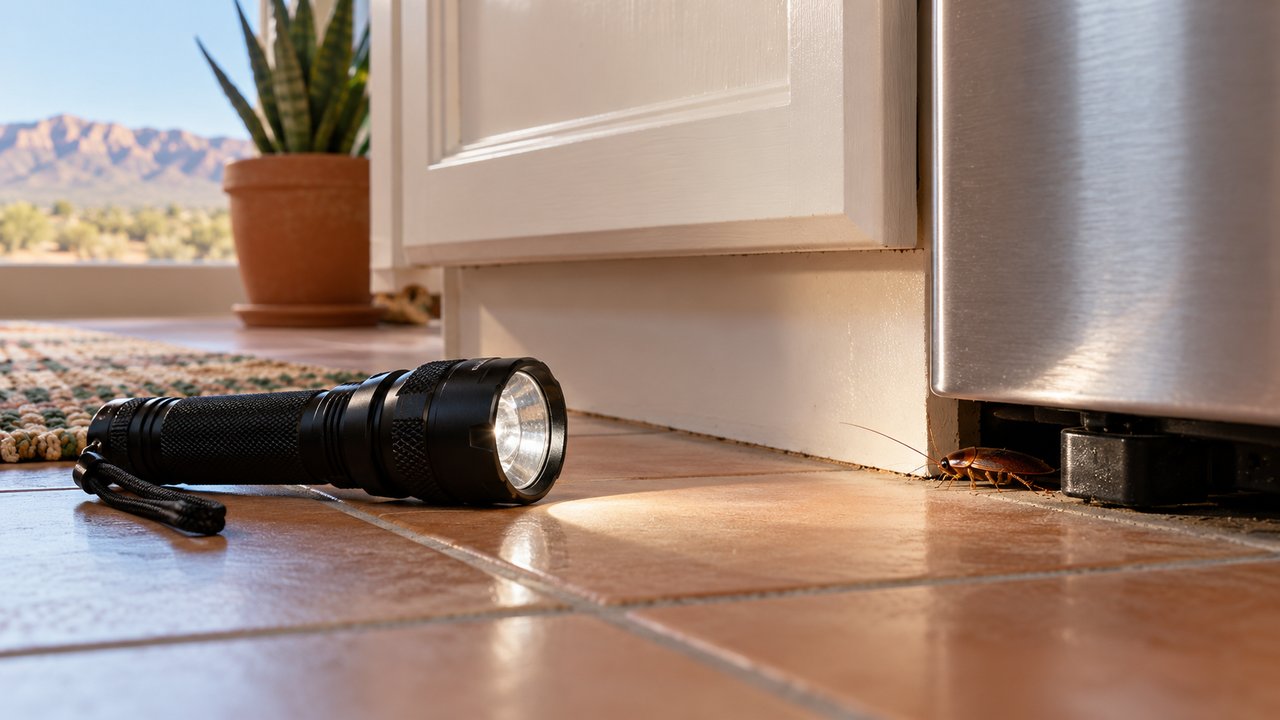
A photo can support identification, but accessible hiding places and adjoining areas may need inspection.
Do not move appliances with electrical or plumbing connections yourself.
Combine targeted control with conditions work
Cockroach service can involve inspection, appropriate baiting or other targeted applications, monitoring, and recommendations for sanitation and repairs.
Cracks, appliance voids, cabinet joints, and pipe penetrations may provide harborage.
Shared-wall properties can need coordination beyond a single room or apartment.
Broad spraying and foggers are not a substitute for identifying the source.
Tell us about every product recently used so the treatment plan can account for it.
Prepare without spreading activity
Clear access to relevant cabinets and work areas as instructed.
Seal food and discuss protection of dishes, utensils, and food-preparation surfaces.
Use ordinary cleaning to remove accessible crumbs and grease, but follow specific directions for treatment placements.
Do not wash away a bait or add another pesticide beside it.
For apartments, report activity to the responsible manager and arrange access.
Moving infested items to another unit or shared room can complicate the problem.
Monitor the pattern after treatment
Cockroach treatment may need follow-up, especially where eggs, inaccessible harborages, or neighboring activity are involved.
The schedule should reflect the findings and methods.
Record where sightings occur and whether their frequency changes.
Persistent activity around a particular appliance or pipe opening can guide further inspection.
Leak repair, food management, waste handling, and access-point maintenance help support treatment.
Ask which actions belong to the occupant and which need a contractor or manager.
Focus the inspection on the repeated pattern
If sightings occur beside a dishwasher every evening, share that pattern and any known moisture issue.
If insects appear only after opening a garage door, explain the exterior context rather than assume the same indoor problem.
Photographs of young insects, adults, and protected areas can help when obtained safely.
Do not pull out connected equipment or apply chemicals into electrical spaces to investigate.
A shared-property assessment benefits from communication about adjoining activity.
Let the manager know if reports are occurring in more than one unit or around common services.
After work, distinguish old debris from fresh sightings.
Record new evidence with the time and place so monitoring can guide the next decision.
A defined cockroach plan links identification, harborage, suitable treatment, and maintenance.
Ask what each visit is intended to establish rather than expect every stage to be resolved by a single broad application.