
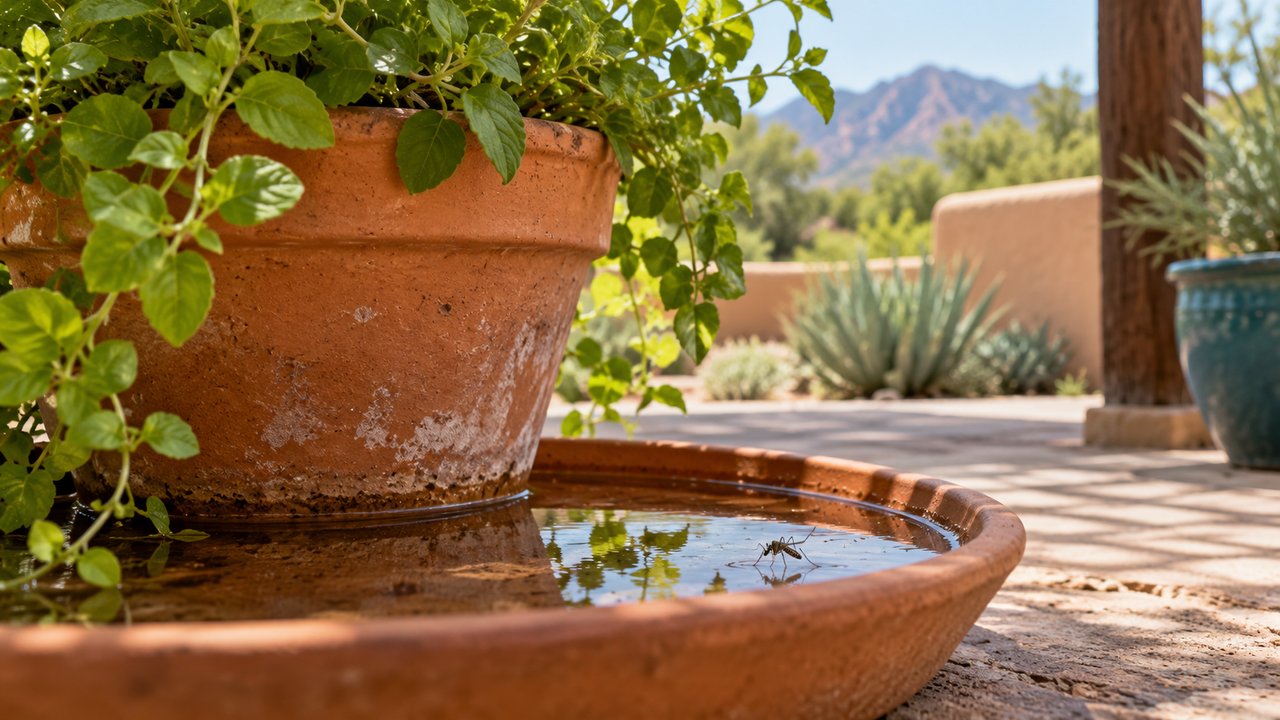
Look for the water that is easy to miss
Plant saucers, toys, discarded containers, gutters, and irrigation-related pooling can provide breeding sites.
Small sources matter alongside obvious ponds or drains.
City guidance emphasizes reducing breeding habitat and checking for water after rain.
A yard assessment should examine where water accumulates and how it can be managed.
Do not assume all mosquitoes originate on your property.
Nearby habitat, public drainage, and other sources may affect the results of a private-property treatment.
Match control to habitat and exposure
Mosquito service can include inspection, breeding-source recommendations, monitoring, and appropriate treatment where the site and product permit it.
Methods depend on the water source, adult activity, sensitive areas, and property use.
Ponds, pollinator areas, pets, and neighboring properties need consideration.
The proposed scope should explain the areas covered and what the owner needs to maintain.
No treatment can honestly promise that every mosquito in an outdoor environment will disappear.
Prepare the yard for assessment
Identify recurring pooling, irrigation schedules, rain barrels, drains, and water features.
Tell us where activity interferes with outdoor use.
Keep relevant areas accessible and share information about ponds, aquariums, beehives, pets, or sensitive plants.
Follow any method-specific preparation and re-entry directions.
Do not climb onto a roof or enter a drainage structure to check water.
Arrange appropriate maintenance help for inaccessible or hazardous areas.
Prevention continues between visits
Empty unnecessary water-holding containers and maintain features that retain water.
Clean and refresh appropriate household water sources according to local guidance.
Repair screens to reduce indoor entry.
Personal bite-prevention measures remain useful even when the property is receiving pest management.
Albuquerque and Bernalillo County residents can report mosquito concerns and standing water through 311.
Public reporting and private-property service have different roles.
A yard assessment with useful information
Describe where activity affects outdoor use: a shaded patio, pool edge, garden, or work area.
Include the times when you notice it and whether nearby water sources remain after rain.
An irrigation puddle, plant saucer, and permanent pond need different maintenance conversations.
Tell us which sources can be emptied and which must remain in use.
Sensitive habitat matters to the proposal.
Aquatic life, flowering plants, animal spaces, and neighboring boundaries can limit what method is suitable and where it can be used.
After service, record sources that refill and any changes in adult activity.
Habitat management is a continuing property task, so a treatment review should consider those observations.
Public drainage concerns belong with the appropriate local reporting route.
A private-property plan can address the identified premises while recognizing that surrounding sources and outdoor exposure may remain.