What this guide helps you decide
Find overlooked standing water, maintain household water features, and understand local mosquito reporting in Albuquerque.
Use the guidance to record useful evidence and prepare questions.
The actual pest, property, product, and treatment method determine what applies to your situation.
Check the containers you do not think of as containers
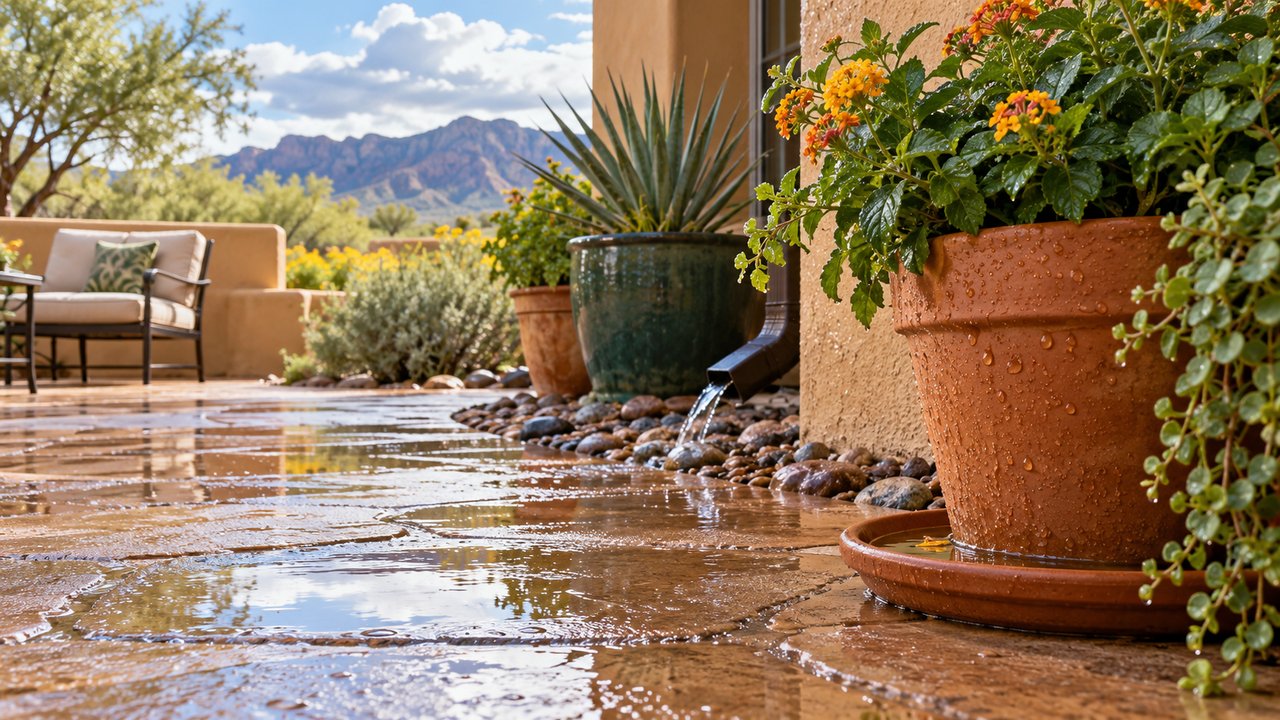
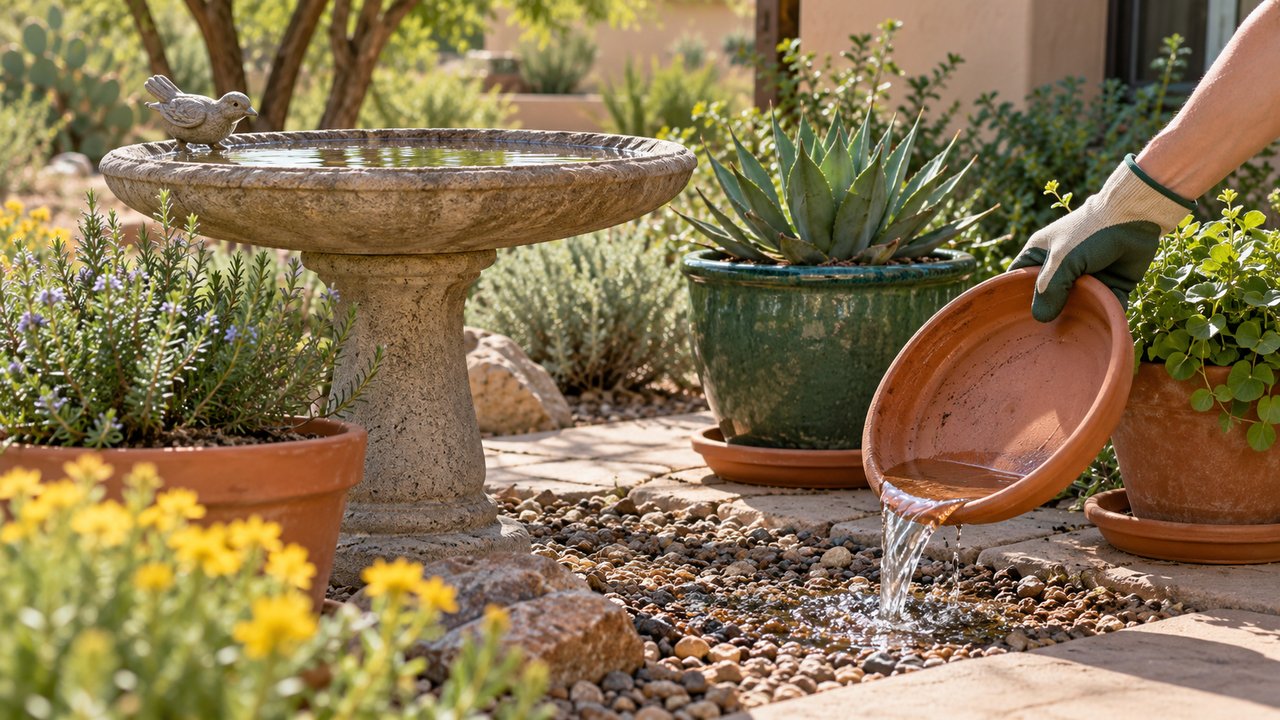
Plant trays, children's toys, discarded cans, spare tires, and unused buckets can collect water.
Check after rain and when irrigation patterns change.
Turn unused items over or store them so they cannot hold water.
Do not create a new puddle next to the house while emptying a container.
Keep the inspection practical and safe.
Roof pockets, deep drains, and other hazardous access should be handled by appropriate maintenance help.
Maintain water features appropriately
Birdbaths, pet dishes, fountains, rain barrels, pools, and ponds serve different purposes.
Their maintenance should fit the feature and its occupants.
City guidance includes regular cleaning and water management.
A pond with aquatic life should not receive an indiscriminate product application.
Tell a provider about fish, plants, pets, and the water's use before discussing treatment.
The product and habitat determine suitability.
Do not assume all sources are yours
Mosquitoes may be associated with surrounding habitat and nearby water beyond the property.
A private yard treatment cannot control every source in a neighborhood.
Albuquerque and Bernalillo County residents can report concerns through 311.
Public vector-control work has a different scope from a private-property service.
Report the location and condition clearly.
A useful description of standing water helps more than a broad statement that mosquitoes are everywhere.
Use screens and personal precautions
Sound screens reduce indoor entry.
Repair ordinary damage and check the way doors close without blocking necessary ventilation.
Personal bite-prevention measures remain relevant even when your yard receives service.
Use registered repellents according to their label and appropriate age restrictions.
Do not infer a disease diagnosis from a mosquito bite.
Seek medical advice for health concerns, and use public health information for current local alerts.
Ask what a treatment includes
A service proposal should explain inspection, habitat recommendations, treated areas, precautions, and monitoring.
Ponds, pollinators, neighboring areas, and occupied spaces affect the plan.
Ask which water sources the owner must maintain.
Treatment cannot permanently compensate for containers that refill after every irrigation cycle.
Avoid a promise that all outdoor mosquitoes will disappear.
The realistic scope is to address identified property conditions and discuss residual exposure.
Keep a repeatable routine
Make a short accessible-yard check part of routine maintenance.
Repeat it after rain, outdoor events, new planters, or changes to watering.
Note which sources refill and how quickly.
That can reveal a drainage or irrigation issue needing separate repair.
If activity continues, provide the observations to the person assessing the yard.
A review based on habitat and evidence is better than adding products at random.
One overlooked container can explain a recurring task
Imagine a plant saucer refills every time irrigation runs.
Emptying it once does not change the recurring condition.
Review whether the container, watering arrangement, or maintenance routine can be changed appropriately.
Now compare a permanent pond.
That feature needs a plan respecting aquatic life and its purpose rather than simply being emptied or sprayed.
These examples show why habitat management starts with the water source.
Different uses need different decisions even when adult mosquitoes are the common complaint.
Record the property limits
Note sources you can manage, sources requiring maintenance help, and sources beyond your property.
This helps separate private service from municipal reporting.
Ask how treatment fits pollinator areas, pets, water features, and adjacent spaces.
Product suitability and precautions should be explained before application.
Review the routine after rain, new planters, or changed irrigation.
Prevention works through repeatable maintenance and appropriate control, while screens and personal bite precautions remain useful where outdoor exposure continues.
Your practical checklist
- Check small containers after rain
- Store unused containers upside down
- Maintain water features appropriately
- Repair ordinary screen damage
- Report public concerns through 311
- Use repellents according to their label
- Record sources that repeatedly refill
Prepare an informed service enquiry
A useful enquiry explains the original activity, the property type, and how often it has appeared.
Include any recent maintenance, deliveries, travel, or product use that relates to the concern.
Have the address and access arrangements ready.
For rental or shared properties, identify the person who can authorize the work and coordinate relevant spaces.
Ask what the inspection can establish, which areas are accessible, and what limitations apply.
Confirm the treatment scope, preparation, follow-up, and separately quoted work before making a decision.
Common questions
Can a plant saucer support mosquitoes?
Small standing-water sources can be relevant.
Include trays in your routine checks.
Can I treat any pond with a mosquito product?
No.
Aquatic life, water use, habitat, and label permissions determine suitability.
Does yard treatment replace repellent?
No.
Personal bite-prevention measures remain useful where outdoor exposure continues.
Sources and further reading
Public sources checked October 9, 2026.
Sources from other regions support general pest guidance; they do not establish Albuquerque infestation rates.