What this guide helps you decide
A practical rainy-weather checklist for standing water, entry points, storage, and pest activity around Albuquerque homes.
Use the guidance to record useful evidence and prepare questions.
The actual pest, property, product, and treatment method determine what applies to your situation.
Check containers after rain
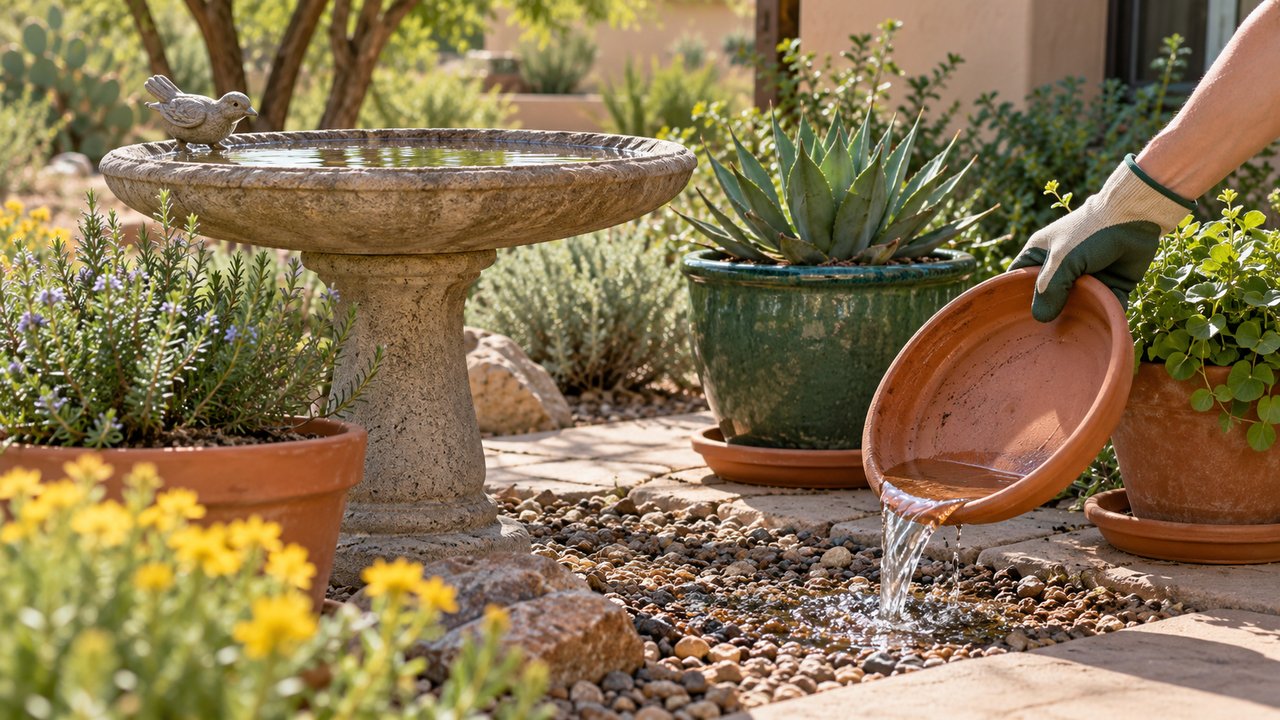
Plant trays, toys, buckets, discarded packaging, and other small containers can hold water.
Walk accessible areas and remove unnecessary water sources without entering unsafe drainage or roof spaces.
Water features and rain barrels need suitable maintenance.
Do not empty or treat a pond without considering its purpose, occupants, and applicable instructions.
A dry-looking yard can still have shaded pockets of water.
Repeat the check when weather or irrigation changes rather than relying on one inspection at the start of the season.
Understand the mosquito timing
Albuquerque's July 2024 rainfall advisory notes that mosquitoes can develop from egg to adult in as little as seven days.
This is a possible development time, not a prediction for every container or neighborhood.
The practical lesson is to avoid leaving new water sources unattended.
A recurring check is more useful than waiting until outdoor activity becomes uncomfortable.
Municipal mosquito work and private-property pest service have different scopes.
Residents can report standing water or mosquito concerns through 311.
Review doors and screens
Damaged screens, door sweeps, and ordinary access gaps can admit insects.
Inspect from a safe position and arrange repairs where needed.
Pay attention to the locations where new activity appears.
A threshold with repeated crickets may be a different issue from insects found in damp storage.
Do not seal ventilation, weep holes, or required drainage blindly.
Exclusion should preserve the building's necessary functions.
Keep stored materials dry and accessible
Rain can expose a leak, wet a garage corner, or affect stored cardboard.
Address the moisture source and check the material rather than cover it with pesticide.
Keep food and pet feed in appropriate closed containers.
Move ordinary storage away from direct water exposure, without disturbing suspected wildlife or rodent contamination.
If an area smells damp or contains damaged material, determine whether maintenance or another specialist service is needed.
Pest treatment cannot repair a leak.
Record changes before treating
Compare the timing of activity with rain, irrigation, open doors, deliveries, and maintenance.
A short record can reveal a repeating condition.
Do not assume every new insect was forced indoors by the same weather event.
Identification remains necessary, and some activity may be unrelated.
If you use a registered product, follow its permitted site and label directions.
Weather, runoff, and sensitive areas can affect whether an application is appropriate.
Know when to arrange an inspection
Repeated activity, a possible nest, indoor breeding clues, or unclear identification warrants a discussion.
Explain the location and what changed after the weather.
For mosquitoes, describe standing water and the way the outdoor space is used.
For rodents or wildlife, mention signs without disturbing contaminated or occupied areas.
A useful plan separates maintenance, habitat reduction, treatment, and follow-up.
Each should answer the conditions found rather than a generic seasonal promise.
A useful check after one wet evening
Imagine rain has left water in a plant tray and dampened boxes near a garage door.
Those are two maintenance questions: manage the water source and investigate why stored materials became wet.
If mosquitoes appear, the water deserves attention.
If small insects appear among the boxes, identification is still needed; the presence of rain does not establish the insect.
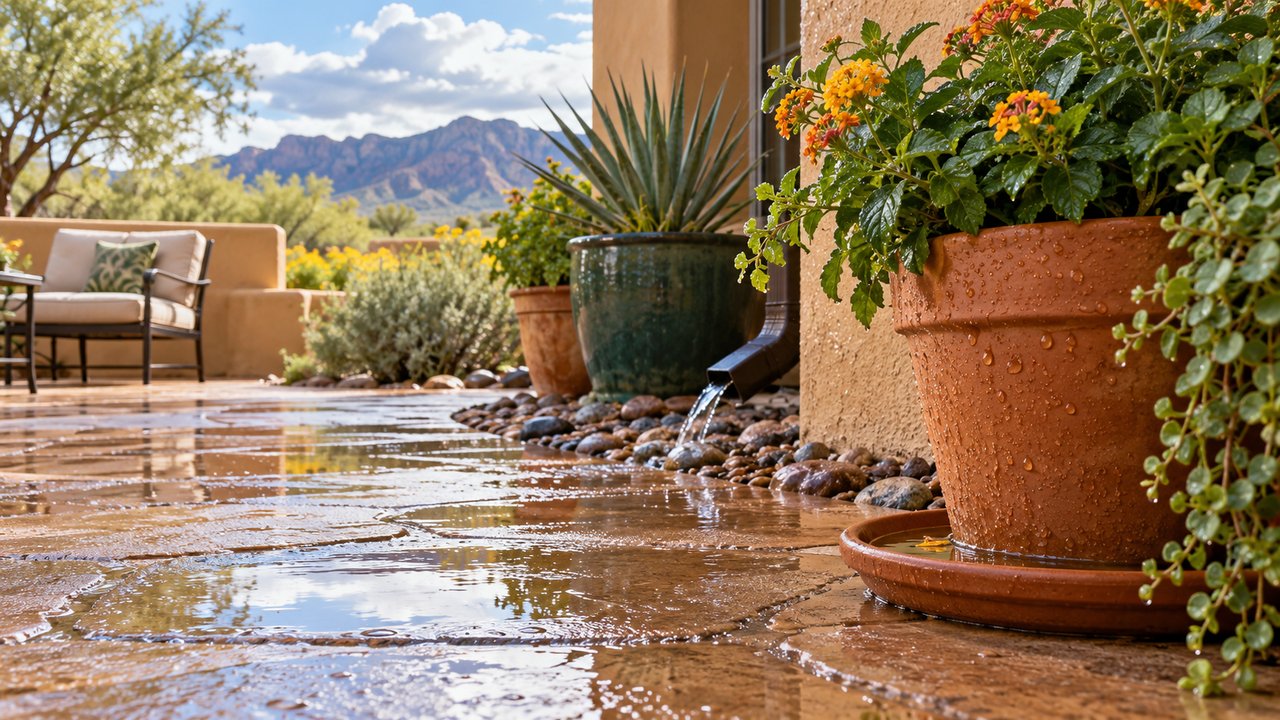
Photograph recurring pooling and its location.
If it returns after irrigation, a watering or drainage adjustment may be more useful than repeatedly treating the same spot.
Avoid making prevention a risky project
A safe accessible walk around the yard can reveal a great deal.
It does not require climbing onto a roof, entering a drain, or disturbing a nest.
Assign inaccessible repairs to the right professional and keep the pest enquiry focused on observed activity.
Share which maintenance has already been completed so the assessment can account for the current conditions.
When weather changes again, repeat the short check.
The practical goal is a maintained property and an evidence-based response, not a guarantee that the outdoor environment will contain no insects.
Your practical checklist
- Empty unnecessary water-holding containers
- Maintain appropriate water features and rain barrels
- Check screens and door sweeps
- Address leaks and damp storage
- Record repeated pest activity
- Report public standing-water concerns through 311
Prepare an informed service enquiry
A useful enquiry explains the original activity, the property type, and how often it has appeared.
Include any recent maintenance, deliveries, travel, or product use that relates to the concern.
Have the address and access arrangements ready.
For rental or shared properties, identify the person who can authorize the work and coordinate relevant spaces.
Ask what the inspection can establish, which areas are accessible, and what limitations apply.
Confirm the treatment scope, preparation, follow-up, and separately quoted work before making a decision.
Common questions
Does rain always cause an infestation?
No.
Weather can change property conditions, but activity still needs identification and assessment.
Can mosquitoes develop in a week?
The City notes development can be as short as seven days under suitable conditions.
Actual timing varies.
Should I climb onto a flat roof to check water?
No.
Use appropriate maintenance help for roof or other hazardous access.
Sources and further reading
Public sources checked October 9, 2026.
Sources from other regions support general pest guidance; they do not establish Albuquerque infestation rates.