
Identify
Establish the weed or pest and distinguish other causes of plant or turf decline.
Persistent weeds in gravel, beds, or turf need a plan that fits the plants and site.
Our weed control in Albuquerque includes identification and discussion of pre-emergent, post-emergent, and maintenance options where appropriate.
Call (505) 112-7788Open 24/7 · Albuquerque, NM
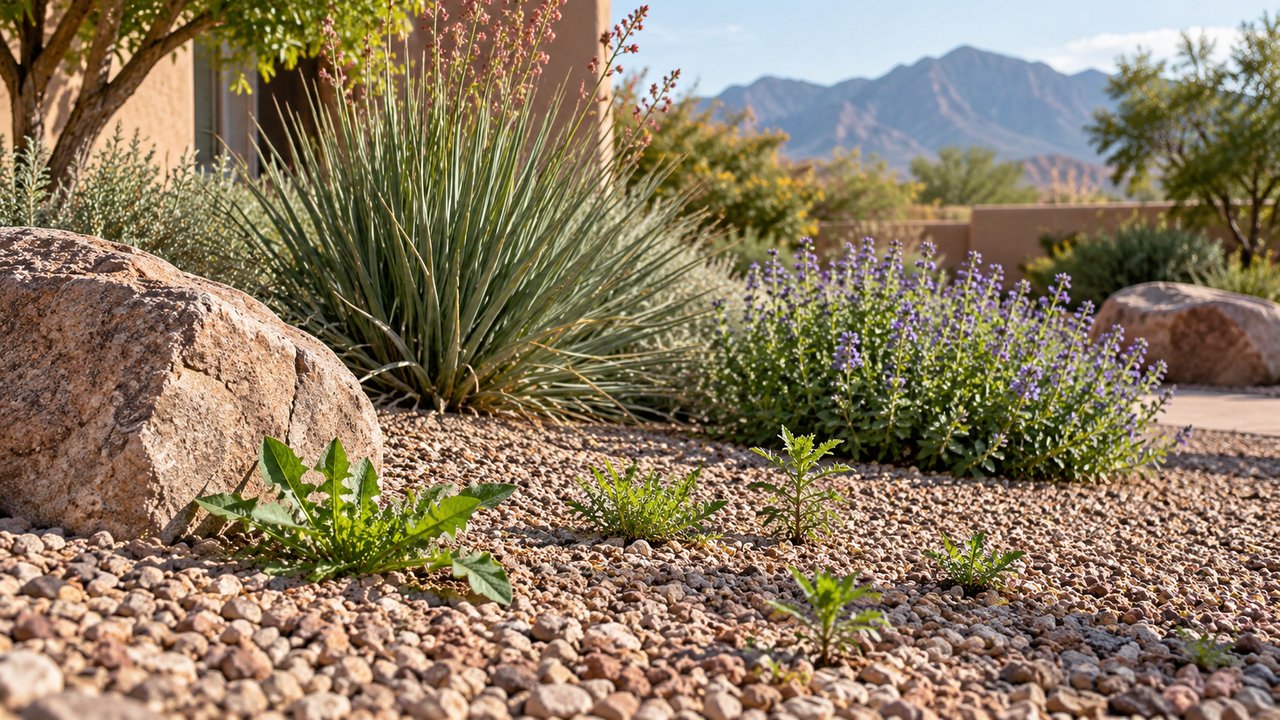
These are clues to discuss, not a diagnosis.
Share where activity appears and whether it has returned after previous work.
Establish the weed or pest and distinguish other causes of plant or turf decline.
Consider growth stage, site, desirable plants, timing, and product permissions.
Look for fresh activity or emergence and coordinate appropriate landscape maintenance.
A weed in bare gravel needs a different approach from growth within desirable turf or beside a valued ornamental.
Identification and site conditions guide the options.
Annual and perennial growth can behave differently.
Timing matters, and one visible treatment may not address seeds or below-ground structures.
Tell us where the growth occurs, what plants should be protected, and what products have already been used.
Photographs of leaves and the whole plant can help.
Pre-emergent options are intended to address susceptible weeds before establishment under the appropriate conditions.
They do not remove every established plant.
Post-emergent methods target existing growth where the product and site permit.
Selectivity, desirable plants, weather, and application conditions affect the choice.
A weed-control plan can involve more than one stage.
The quote should explain the targeted weeds, treatment areas, timing, and maintenance responsibilities.
Share information about edible plants, ornamentals, turf, pets, water features, and adjoining properties.
Drift, runoff, access, and label restrictions must be considered.
Do not apply household chemicals, fuels, or homemade mixtures to weeds.
These can create exposure and damage without providing an appropriate control plan.
Preparation, irrigation, and re-entry instructions must reflect the actual selected method.
There is no single waiting period that applies to all herbicide work.
New growth can appear from existing seeds or incoming sources.
Weather, watering, soil disturbance, and landscape changes influence recurrence.
Mulch, landscape condition, suitable irrigation, and physical removal may form part of an ongoing approach.
Recommendations should fit the site rather than promise permanently bare ground.
Cleanup, hauling, landscape renovation, and replacement planting are separate scope decisions.
Discuss them before assuming they are included in weed treatment.
A bare-ground gravel area and a mixed planting bed need different options.
Identify the desirable plants, edible crops, water features, and turf that should be protected.
Explain whether unwanted growth is established or appears as new seedlings.
Timing and identification help determine how pre-emergent and post-emergent methods fit the site.
Do not assume a treatment includes physical removal, hauling, or complete landscape restoration.
Agree what happens to existing growth and who handles any later cleanup.
After work, record new emergence and changes to irrigation or disturbed soil.
Those conditions can help explain recurrence and whether a further stage is appropriate.
A useful weed plan relates methods to the actual site, protects surrounding uses according to product requirements, and explains maintenance.
Call with photographs and the treatment area's approximate extent to start the conversation.
The right quote begins with the property and the problem.
Extent of activity, affected areas, construction, access, treatment method, and required visits can change the work.
Ask which inspection areas, treatments, monitoring, and follow-up are included.
Additional services should be discussed before they are assumed to be part of the price.
Building repairs, specialist cleanup, waste removal, formal reports, and other contractor work may need separate arrangements.
Concealed spaces or difficult access may also limit the initial scope.
Tell us what you need before booking.
We will discuss the proposed service and appointment availability without inventing a fixed price, arrival time, or universal guarantee.
Preparation is specific to the chosen work.
Explain whether the property has children, pets, aquariums, sensitive spaces, occupied units, or business operations that need coordination.
Follow the actual product and method instructions for access, cleaning, protection of belongings, and re-entry.
Do not replace those directions with a generic waiting period from another website.
Our approach is to make the questions and scope understandable.
Discuss the evidence and options.
Agree who handles the treatment, maintenance, and any separately quoted work.
We cover the 19 ZIP codes listed on our service-area page.
Call with the full property address and any controlled-access requirements.
Open 24/7 means the business can be contacted around your schedule.
The appointment, entry arrangements, and work must still be confirmed directly.
View service coverage ↗It is generally aimed at susceptible emerging weeds.
Established growth may require a different approach.
Suitability depends on the weed, desirable plants, site, and product requirements.
Identify plants that must be protected.
That cannot be guaranteed.
Seeds, surrounding growth, soil disturbance, and weather can contribute to new activity.
Tell us the pest, the property, and where activity appears.
We’ll discuss the next step and appointment availability.
Call (505) 112-7788