
What this guide helps you decide
Learn what cockroach clues to record, why species matter, and how inspection and monitoring guide treatment.
Use the guidance to record useful evidence and prepare questions.
The actual pest, property, product, and treatment method determine what applies to your situation.
Record size, color, and the original location
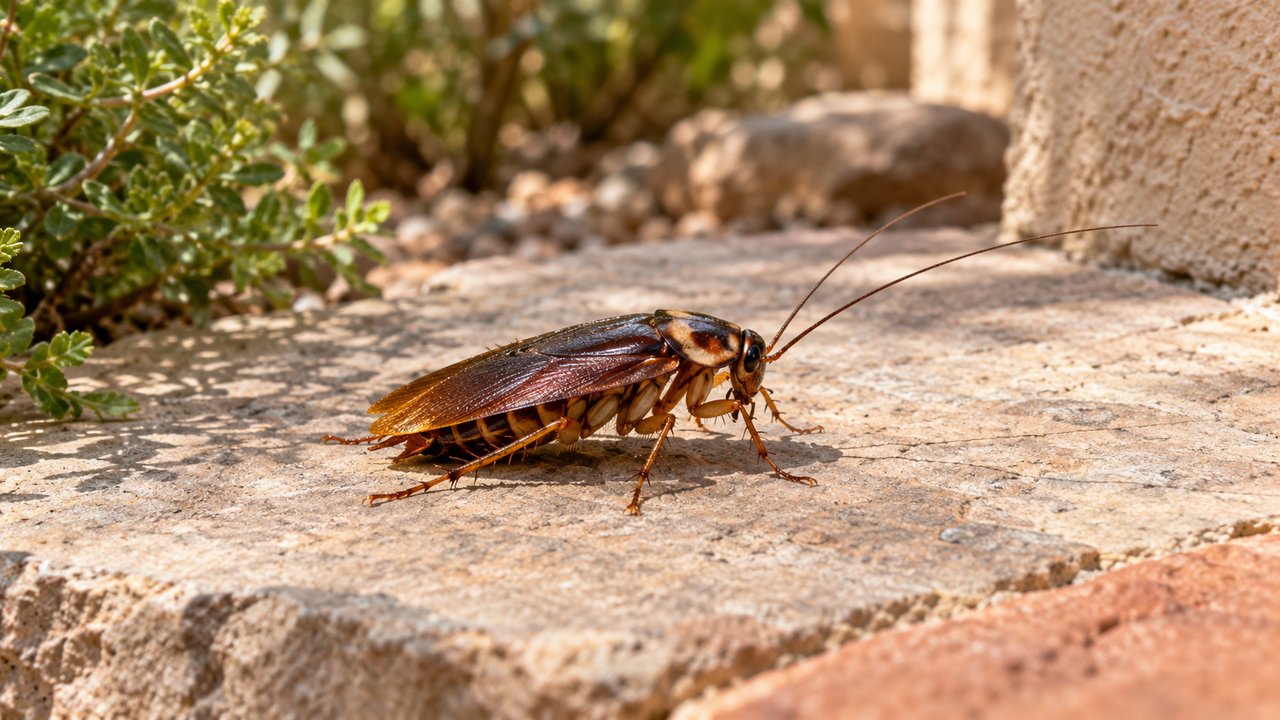
Use a clear photo with a nearby scale reference when safe, and record whether the insect was indoors or outdoors.
Do not handle it to obtain a better image.
Color alone is a poor guide.
Young stages can look different from adults, and lighting can change how markings appear.
The location matters as much as the photo.
Kitchens, drains, garages, exterior edges, and deliveries can suggest different investigation priorities.
Look for recurring evidence
Repeated sightings, small insects, cast skins, and droppings in protected spaces can justify inspection.
They do not reveal every hiding place or establish the species without assessment.
Warmth, moisture, food, and cracks may support activity.
Check accessible areas without dismantling electrical appliances or disturbing plumbing.
A single outdoor visitor should not automatically be described as a large indoor infestation.
Equally, repeated indoor evidence should not be dismissed because the room looks clean.
Shared buildings need coordination
Cockroach activity in multifamily buildings can involve adjoining units, service penetrations, and communal conditions.
Reporting the location to a manager helps arrange the correct access.
Do not move affected appliances or belongings to another unit to solve the issue.
That can create a new location for activity.
Restaurants and other food premises also need to coordinate stock, preparation, sanitation, and treatment restrictions.
The work should fit the operating environment.
Why treatment targets hiding places
Inspection and monitoring help determine where cockroaches are active.
Appropriate treatment may include baits or other targeted methods, depending on the species and site.
Broad applications are not a substitute for reaching the relevant harborage and addressing food or moisture.
Foggers also have exposure and use restrictions.
Tell the provider about existing sprays, baits, or cleaning chemicals.
Compatible timing and placements matter to the plan.
Prepare access and protect food
Follow the actual preparation instructions.
Relevant cupboard edges and appliance areas may need access, while food and utensils need protection.
Cleaning accessible crumbs and grease can support management.
Ask how cleaning should be handled around treatment placements.
Do not use a product in a food area unless its label permits that use.
Household pest work should not contaminate stored food or preparation surfaces.
Review new evidence after treatment
A follow-up plan should explain what changes to report and when monitoring will be reviewed.
One quiet evening is not proof that every harborage has been resolved.
Note the location, life stage if identifiable, and date of sightings.
This can help separate persistent activity from a new introduction.
Maintenance, sanitation, and adjoining-property coordination can affect results.
Ask which actions are yours and which require the owner, manager, or contractor.
Compare two observations without guessing
Suppose one insect appears at an open garage door.
Now suppose small roaches appear repeatedly beneath a kitchen appliance.
Those observations deserve different questions about entry, harborage, and possible indoor activity.
Neither scenario gives a complete diagnosis.
Photographs, recurrence, and accessible evidence help establish whether the problem is isolated or needs a wider assessment.
Tell the provider which observation is yours.
A generic statement that 'the house has bugs' leaves out the information that can guide a more useful first visit.
Make follow-up observations comparable
Use the same locations when recording new activity so changes can be interpreted.
Note whether sightings are in a treated area, a neighboring room, or a place that was not part of the original scope.
Ask how monitoring will be evaluated and what signs should trigger another conversation.
Keep food and maintenance responsibilities clear, especially when different people manage the premises.
The purpose is to learn whether fresh activity persists and why.
Repeating broad applications without updated evidence can miss a continuing source or an access issue that treatment alone cannot fix.
Your practical checklist
- Take a safe-distance photograph
- Record indoor or outdoor location
- Note recurring sightings and immature insects
- Identify accessible food and moisture conditions
- List products already used
- Arrange manager access for shared properties
Prepare an informed service enquiry
A useful enquiry explains the original activity, the property type, and how often it has appeared.
Include any recent maintenance, deliveries, travel, or product use that relates to the concern.
Have the address and access arrangements ready.
For rental or shared properties, identify the person who can authorize the work and coordinate relevant spaces.
Ask what the inspection can establish, which areas are accessible, and what limitations apply.
Confirm the treatment scope, preparation, follow-up, and separately quoted work before making a decision.
Common questions
Can I identify the species by color?
Color alone is unreliable.
Markings, stage, size, and context are important.
Is a daytime sighting proof of a severe infestation?
It is useful information, but severity requires a broader assessment.
Will cleaning alone solve the problem?
Cleaning helps reduce resources.
Identification, harborage, access, and appropriate treatment may also need attention.
Sources and further reading
Public sources checked October 9, 2026.
Sources from other regions support general pest guidance; they do not establish Albuquerque infestation rates.