What this guide helps you decide
Compare common visible clues in winged ants and termites and learn when professional identification is useful.
Use the guidance to record useful evidence and prepare questions.
The actual pest, property, product, and treatment method determine what applies to your situation.
Compare the waist
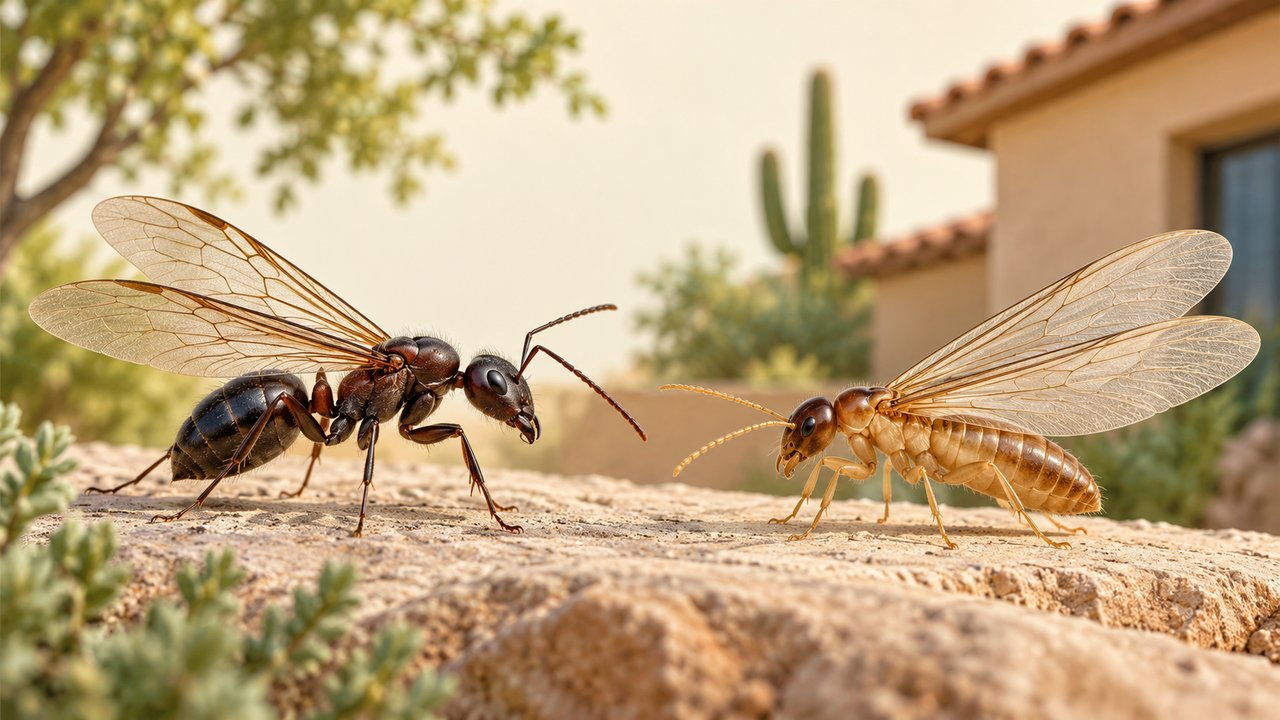
Ants generally have a narrowed waist between the middle and rear body sections.
Winged termites have a broader connection without the same pinched appearance.
This is a broad identification clue, not a substitute for an expert examination.
A blurry image, damaged specimen, or viewing angle may hide the feature.
Take a photograph that shows the entire insect from above if it can be done safely.
Do not crush or handle insects to make the comparison.
Look at antennae and wing proportions
University guidance describes ant antennae as elbowed and termite antennae as comparatively straight.
Winged ants generally have front and rear wing pairs of unequal size; termite wing pairs are similar in size.
Fine features can be difficult to see on a phone screen.
Preserve a clear image or securely contained evidence when practical rather than force a conclusion.
Color and size alone are less helpful.
Different species and stages can vary, and lighting can distort appearance.
Use the original setting
Where the insects appear gives useful context.
Note whether they emerged from an accessible crack, gathered near a light, or were found outside.
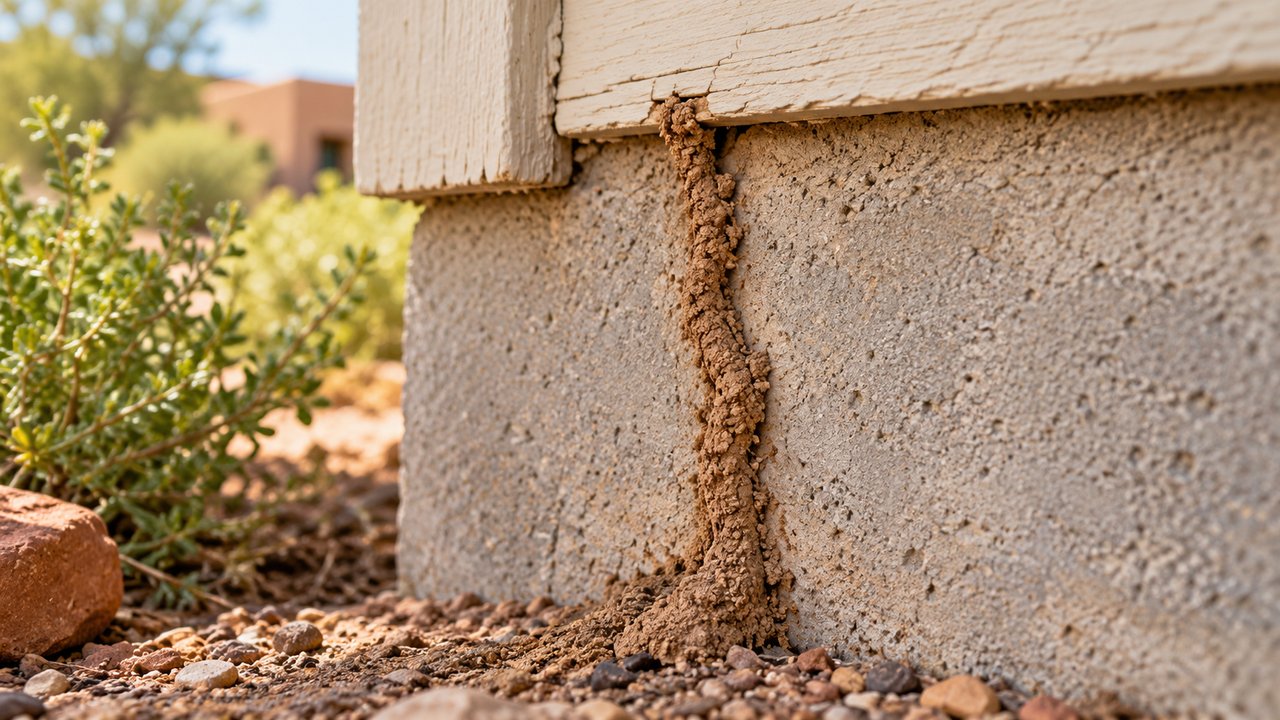
Discarded wings, mud tubes, trails, and wood condition can help an inspection, but none should be interpreted in isolation.
An insect at a window may have moved toward light after entering or emerging elsewhere.
The window is not necessarily the source.
Avoid conclusions about damage
Finding a winged ant does not automatically establish carpenter ants or wood damage.
Finding a suspected termite does not establish the extent of an infestation.
Species and building evidence need assessment.
Other causes of damaged wood may also be relevant.
Do not demolish trim or open walls based on a quick visual comparison.
Structural concerns need appropriate expertise and planned access.
Choose the right next conversation
Tell the provider what you observed, where it happened, and whether activity is recurring.
Share photographs and earlier treatment records if available.
Ask whether the visit is for identification, a treatment assessment, or a formal inspection document.
These can have different scopes.
Do not apply an ant product to an unidentified termite concern.
Methods should follow identification and the property assessment.
Keep records after the assessment
Record the identified pest, treatment scope, and monitoring instructions.
Follow-up should respond to new activity or the agreed plan.
If treatment is recommended, ask which areas and methods are included and whether repair work is separate.
Terms should be documented rather than assumed.
Identification is useful because it narrows the problem.
It does not remove the need to understand access, shelter, treatment limitations, and future monitoring.
Why the photograph can mislead
Imagine a winged insect lies at an angle with one pair of wings damaged.
Wing proportions may be difficult to compare, and the body may be partly hidden.
A straight-on image of the whole insect is more useful, but it still needs interpretation.
Include the original location and any accompanying tubes, trails, or wood concern.
If the photograph remains unclear, say so.
An uncertain identification is better handled with assessment than converted into a confident treatment choice.
Do not turn an identification clue into a damage estimate
A narrowed waist can support an ant identification; it does not tell you which ant species is involved or whether wood is damaged.
Similar wing pairs can support a termite concern; they do not measure infestation extent.
Ask what further evidence is needed and which inspection scope fits the concern.
Keep reporting requirements separate if the enquiry relates to a sale or lender.
Once the pest is identified, the next questions concern the property, activity, treatment options, and monitoring.
The comparison helps choose those questions; it is not a complete inspection delivered by a photograph.
Your practical checklist
- Photograph the whole insect and location
- Compare waist, antennae, and wings cautiously
- Record accompanying tubes, trails, or damage
- Avoid guessing from color alone
- Ask what kind of inspection you need
- Keep the assessment and treatment records
Prepare an informed service enquiry
A useful enquiry explains the original activity, the property type, and how often it has appeared.
Include any recent maintenance, deliveries, travel, or product use that relates to the concern.
Have the address and access arrangements ready.
For rental or shared properties, identify the person who can authorize the work and coordinate relevant spaces.
Ask what the inspection can establish, which areas are accessible, and what limitations apply.
Confirm the treatment scope, preparation, follow-up, and separately quoted work before making a decision.
Common questions
Do all flying ants damage wood?
No.
A winged ant is not automatically a carpenter ant or evidence of damage.
Are equal-sized wings proof of termites?
They are a useful clue, but identification should consider other features and evidence.
Should I remove all the wings before inspection?
Keep useful evidence and photos where practical.
Avoid disturbing the entire pattern before assessment.
Sources and further reading
Public sources checked October 9, 2026.
Sources from other regions support general pest guidance; they do not establish Albuquerque infestation rates.