What this guide helps you decide
Understand termite clues, inspection limitations, treatment questions, and the difference between pest work and structural repair.
Use the guidance to record useful evidence and prepare questions.
The actual pest, property, product, and treatment method determine what applies to your situation.
Photograph visible clues
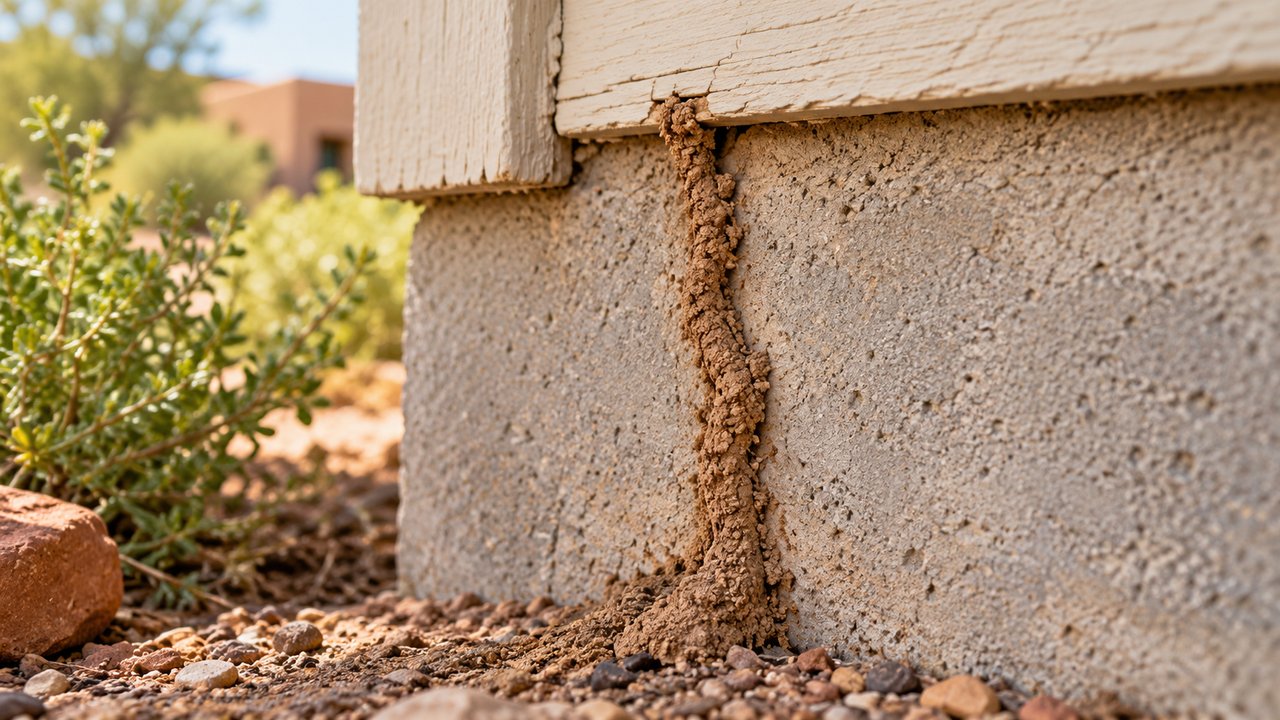
Take clear pictures of tubes, insects, wings, or damaged material in their original location.
A wider image helps show how the clue relates to the foundation or wood.
Avoid scraping away all evidence before an inspection.
Do not open a wall or enter an unsafe space simply to check for more.
Visible signs may be limited even where concealed activity exists.
The absence of obvious evidence is not a certificate that the structure is unaffected.
Do not assume every wood problem is termites
Moisture, decay, other insects, and physical damage can produce similar concerns.
The cause matters because pest treatment cannot fix every kind of deterioration.
A hollow sound or damaged trim is a reason to investigate rather than a remote diagnosis.
Identification should guide treatment selection.
If you are concerned about structural safety, arrange appropriate building expertise.
Pest assessment and structural evaluation have different responsibilities.
Understand visual-inspection limits
An inspection depends on accessible areas and the scope agreed.
Concealed framing, covered surfaces, and inaccessible voids may not be visible.
Share previous reports, treatment records, leaks, additions, and construction changes.
These can influence the questions and areas examined.
Ask what limitations will be recorded and whether further access is recommended.
A useful explanation is more valuable than an unsupported all-clear statement.
Ask which service you need
A treatment assessment and a formal wood-destroying-organism report can have different purposes.
If the inspection is for a transaction, state the recipient and requirements before booking.
NMDA identifies relevant licensing requirements for structural pest work and inspection.
The provider should confirm the appropriate scope and qualification without relying on a generic website badge.
Do not assume a general pest visit includes termite treatment or a transaction document.
Confirm it explicitly.
Compare treatment and monitoring
The identified termite and construction conditions influence suitable methods.
Soil-related treatment, baiting, localized work, and monitoring have different requirements.
Ask which parts of the property are covered, what access or disruption is expected, and what follow-up is included.
Product and installation directions matter.
Guarantees, renewal terms, and damage repair coverage must be stated in the actual agreement.
They should never be inferred from a competitor's advertising.
Separate repairs from pest management
Damaged wood, drainage, leaks, and soil-contact conditions may need maintenance alongside pest service.
Assign those responsibilities clearly.
An application does not restore structural strength or remove the need for repair.
Discuss when repair should be coordinated with the pest work.
Keep records and report new evidence after treatment.
Monitoring should respond to changes rather than assume every future sign is old damage.
A treatment concern and a transaction request differ
Imagine you notice a tube near a foundation and want to understand whether it is termite activity.
That enquiry begins with evidence and a property assessment.
Now imagine a buyer or lender requests a formal wood-destroying-organism document.
The provider needs to know that purpose, required format, and recipient before booking.
Both situations may involve the same building, but their deliverables differ.
Being precise helps prevent an ordinary treatment conversation from being mistaken for completion of a formal reporting requirement.
Ask about the long-term responsibilities
When reviewing a proposed treatment, clarify follow-up, monitoring, renewal, and any warranty terms.
Do not assume that a term used by another provider has the same meaning in your agreement.
Identify who handles moisture correction, damaged materials, and access improvements.
Those conditions can require work beyond the pest treatment itself.
Keep photographs, inspection limitations, and service records together.
If new evidence appears after work, these records help explain what changed without pretending that every concealed part of the structure was visible during the first assessment.
Your practical checklist
- Photograph evidence in its original location
- Keep previous inspection and treatment records
- State whether formal transaction documents are needed
- Ask about inaccessible areas
- Clarify treatment, monitoring, and repair scope
- Report new evidence after work
Prepare an informed service enquiry
A useful enquiry explains the original activity, the property type, and how often it has appeared.
Include any recent maintenance, deliveries, travel, or product use that relates to the concern.
Have the address and access arrangements ready.
For rental or shared properties, identify the person who can authorize the work and coordinate relevant spaces.
Ask what the inspection can establish, which areas are accessible, and what limitations apply.
Confirm the treatment scope, preparation, follow-up, and separately quoted work before making a decision.
Common questions
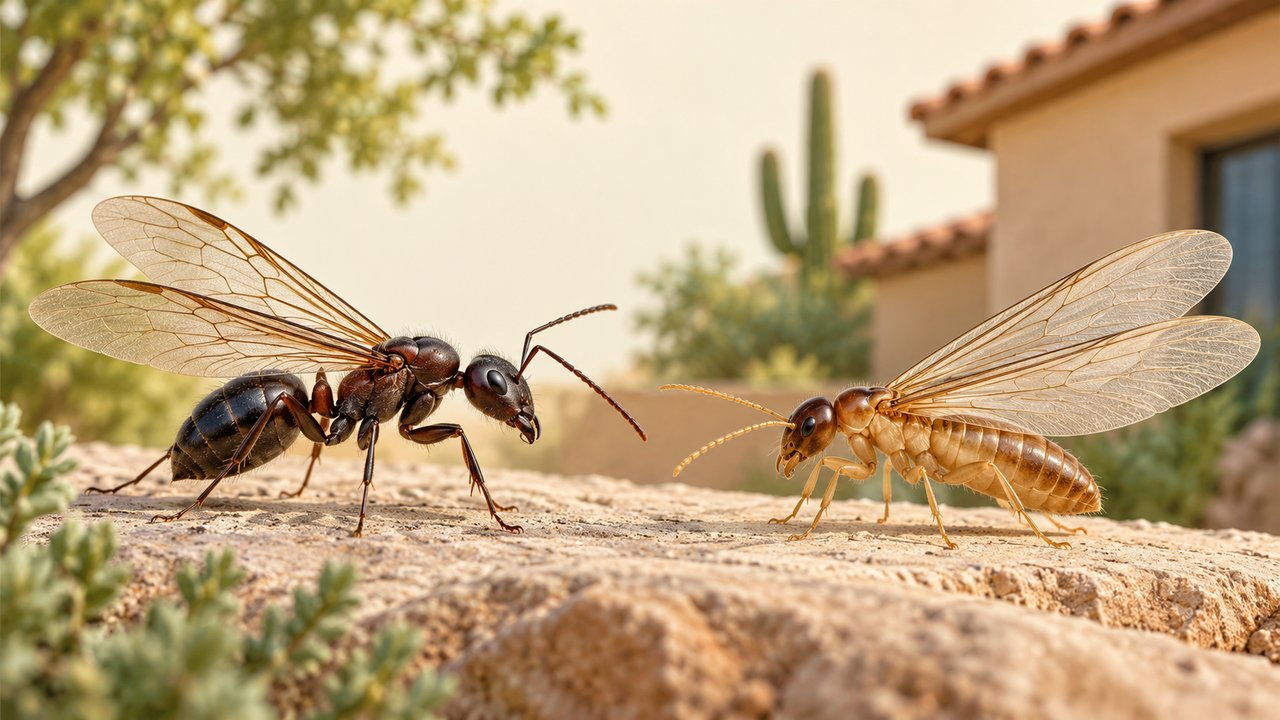
Do discarded wings prove termites?
No.
Winged ants and other insects can be confused with termites.
Identification is needed.
Does termite treatment include wood repair?
Not automatically.
Structural repair and pest management are separate scopes.
Can an inspection see inside every wall?
No.
Visual inspections have access limits that should be explained.
Sources and further reading
Public sources checked October 9, 2026.
Sources from other regions support general pest guidance; they do not establish Albuquerque infestation rates.