What this guide helps you decide
Learn why boxelder bugs gather on walls in fall, how to distinguish nuisance activity from damage, and when to discuss entry prevention or control.
Use the guidance to record useful evidence and prepare questions.
The actual pest, property, product, and treatment method determine what applies to your situation.
Begin with a careful identification
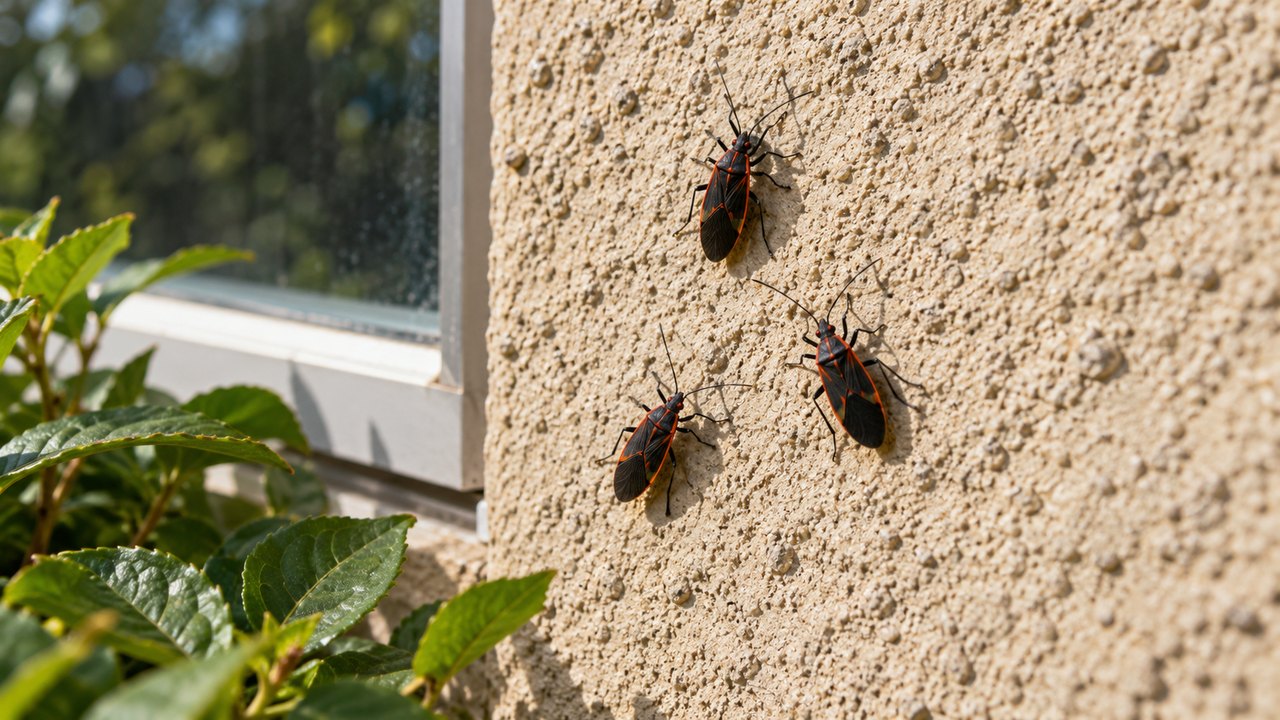
Colorado State University describes adult boxelder bugs as about half an inch long, black with characteristic red lines on the thorax and wings.
Young stages look different, so color alone is not a complete identification.
Other true bugs can resemble them.
Take a clear photograph of the insect and the place where it is gathering if you can do so safely.
Do not identify every red-and-black insect from an internet thumbnail.
Tell the provider whether the bugs are outdoors, entering around a window or already appearing in occupied rooms.
Those settings can change the questions asked and the scope considered.
The photograph can guide a conversation, while an inspection may still be needed to confirm the issue.
Why a sunny wall can attract attention in fall
NMSU's boxelder factsheet describes bugs gathering on windows, porches and building sides during cool sunny days in fall and spring.
Extension guidance also explains that adults seek protected places for overwintering.
That pattern can help explain a wall congregation without proving a local outbreak.
Albuquerque properties vary, and weather, nearby host plants and the building's accessible shelter can all be relevant to an assessment.
Record the time and surface involved.
If the same wall receives repeated activity while the interior remains quiet, say so.
A cluster on one exterior surface is a different report from insects emerging in several rooms.
Give the evidence enough detail to support an appropriate response.
Understand the nuisance before assuming damage
Boxelder bugs around buildings are generally treated as nuisance pests.
Colorado State University notes that they can stain light surfaces or produce an unpleasant odor when crushed.
Their presence should not automatically be described as structural damage.
The condition of a window frame or wall still deserves its own assessment if it is visibly damaged.
An insect resting on that surface is not proof it caused the defect.
Keep the insect-identification question separate from the maintenance question.
Avoid crushing clusters against furnishings or painted surfaces while trying to resolve the complaint.
Ask about suitable removal and protection of the affected materials.
A measured response can protect the space without turning a nuisance sighting into an unsupported emergency diagnosis.
Look for entry opportunities at accessible edges
Screens, door seals and gaps around accessible window edges are useful maintenance points to review when bugs enter a building.
Describe visible defects and the original arrival locations rather than sealing random areas without a purpose.
Extension guidance supports screening or sealing suitable entrances.
That does not mean every crack in a building should be filled with the same material.
Ventilation, drainage and construction details may need maintenance advice.
Make a short list of the edges you can safely see.
Do not climb to a roofline or dismantle fixtures to find every possible opening.
Ask which findings need professional access and which ordinary repairs can be arranged by the owner.
Entry prevention and insect treatment may require different people.
Indoor sightings need a different conversation
Once insects are inside, removal can provide temporary relief while entry and sheltered spaces are assessed.
Discuss a suitable approach for the actual setting, particularly where food, children, animals or sensitive furnishings are involved.
Do not assume a household pesticide is suitable for a wall cavity or every resting surface.
Products and application sites must match their labels, and the selected method should determine preparation and re-entry instructions.
If you rent or manage several units, explain which rooms and shared spaces are affected.
Keep resident reports concise and coordinate permission before work is arranged.
Activity in one unit is useful evidence, but it does not automatically authorize treatment in another person's living space.
When professional help may be useful
Repeated entry, large persistent congregations, difficult access or uncertainty about identification can justify a service conversation.
Ask what an inspection will establish and whether treatment, removal, repairs or monitoring are part of the recommended response.
A provider should explain the purpose of any proposed exterior work and its limits.
Removing the insects you can see does not by itself make every building opening inaccessible or guarantee that outdoor insects will never return.
Tell us about nearby plants, recent property changes and products already applied.
These details can help focus assessment without assigning a cause in advance.
Call with the physical property ZIP so the proposed visit stays within the service footprint advertised on this website.
Prepare a fall record that stays useful
A few notes can make a repeating seasonal concern easier to discuss.
Record the date, sunny or shaded surface, number described in ordinary terms, and whether bugs were entering or only resting outdoors.
A safe photograph adds context.
Keep repair and treatment details with that record.
If a screen was replaced or an entry gap repaired, note when it happened and whether the sightings changed.
Avoid interpreting one quiet day as proof that every source has been removed.
After service, follow the actual directions for cleaning, access and reporting continued activity.
Ask which maintenance remains and when a review would be useful.
The goal is a practical response to identified nuisance activity, with realistic expectations for an open outdoor environment.
Your practical checklist
- Photograph identification features safely
- Record outdoor versus indoor locations
- Inspect accessible screens and door seals
- Avoid crushing bugs onto furnishings
- Separate wall defects from insect activity
- Explain children, pets and occupied spaces
- Ask what control and repair work is included
Prepare an informed service enquiry
A useful enquiry explains the original activity, the property type, and how often it has appeared.
Include any recent maintenance, deliveries, travel, or product use that relates to the concern.
Have the address and access arrangements ready.
For rental or shared properties, identify the person who can authorize the work and coordinate relevant spaces.
Ask what the inspection can establish, which areas are accessible, and what limitations apply.
Confirm the treatment scope, preparation, follow-up, and separately quoted work before making a decision.
Common questions
Do boxelder bugs damage a home like termites?
They are generally nuisance pests around buildings.
Do not assume they caused a visible structural defect; identify the insect and assess the defect separately.
Why do they appear on a sunny wall?
Extension guidance describes congregation on building surfaces during cool sunny weather and shelter-seeking as conditions change.
Should I remove a nearby tree?
Do not remove a tree based only on a sighting.
Identification, host plants, property context and a suitable management discussion should come first.
Does treating the wall fix an entry gap?
No.
Insect control and building maintenance have different purposes and should be included explicitly in the agreed scope.
Sources and further reading
Public sources checked October 11, 2026.
Sources from other regions support general pest guidance; they do not establish Albuquerque infestation rates.