What this guide helps you decide
Understand termite swarm clues, species and weather variation, and why suspected activity deserves attention beyond a fixed Albuquerque season.
Use the guidance to record useful evidence and prepare questions.
The actual pest, property, product, and treatment method determine what applies to your situation.
A season is context, not an all-clear date
Termite swarms are often the event that makes a hidden concern visible.
EPA explains that many owners do not become aware of termites until seeing a swarm or discovering damage during construction.
Visible activity is only part of the picture.
A month on the calendar cannot identify the insect, locate a colony or establish whether a building is unaffected.
Swarming behavior varies with species and conditions, and a concern outside a familiar seasonal window still deserves appropriate assessment.
For an Albuquerque home, record the actual evidence and date rather than waiting for a season to begin.
A relevant inspection question can arise during a repair, after a weather change or whenever suspicious wings, tubes or damaged wood are found.
First distinguish winged ants from termites
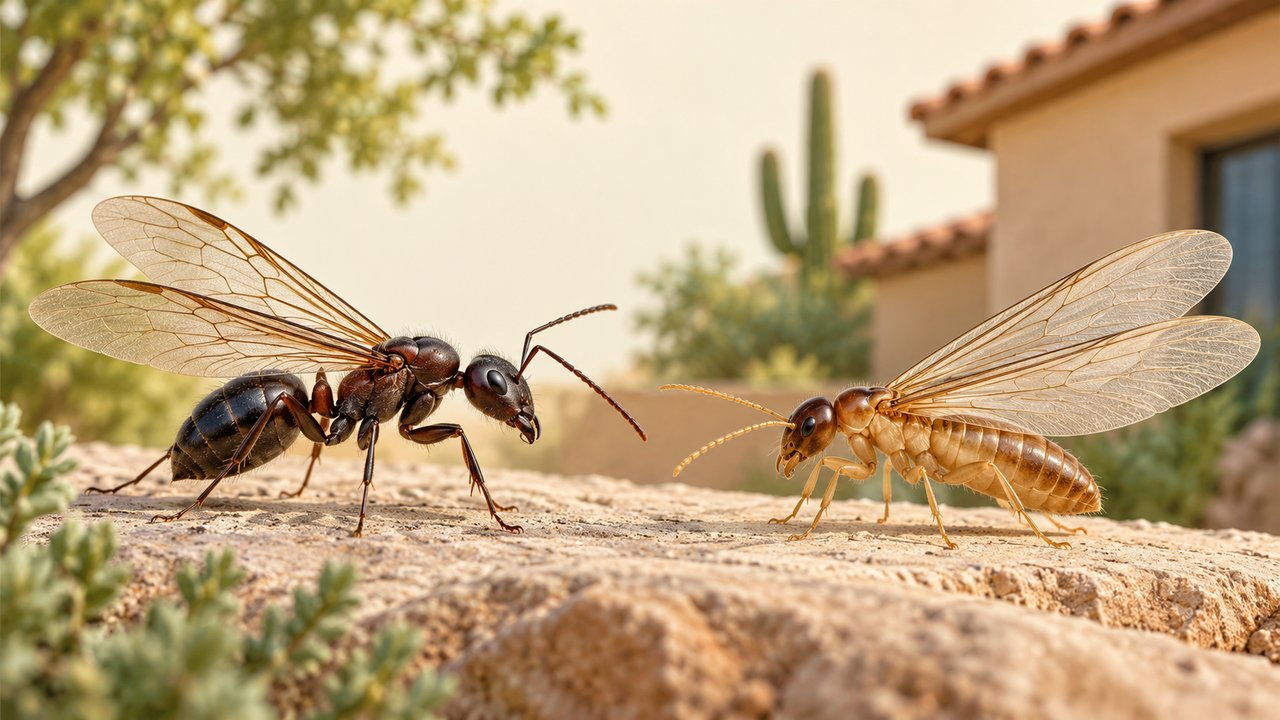
Flying ants and termite swarmers can be confused.
EPA describes useful differences in waist shape, antennae and relative wing length.
A termite's wings are similar in length, while ant wings differ in size; identification should consider several features together.
A clear photograph may help a professional ask better questions.
Include the original location and, if safely possible, a close view that shows the whole insect.
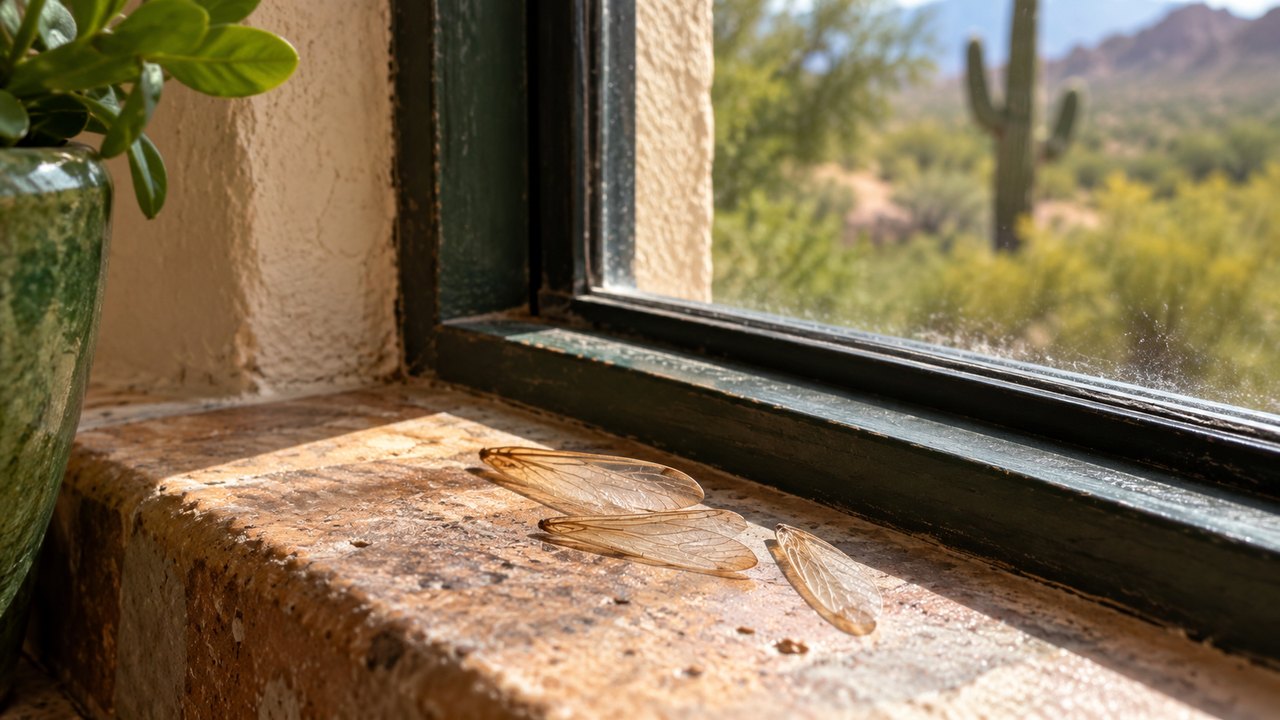
Avoid deciding from a pile of detached wings alone when other features are missing.
Tell us whether the insects appeared indoors or outdoors.
An outdoor swarm does not by itself prove the building is infested, while indoor evidence still requires investigation.
Do not erase the setting by spraying or discarding everything before recording what was found.
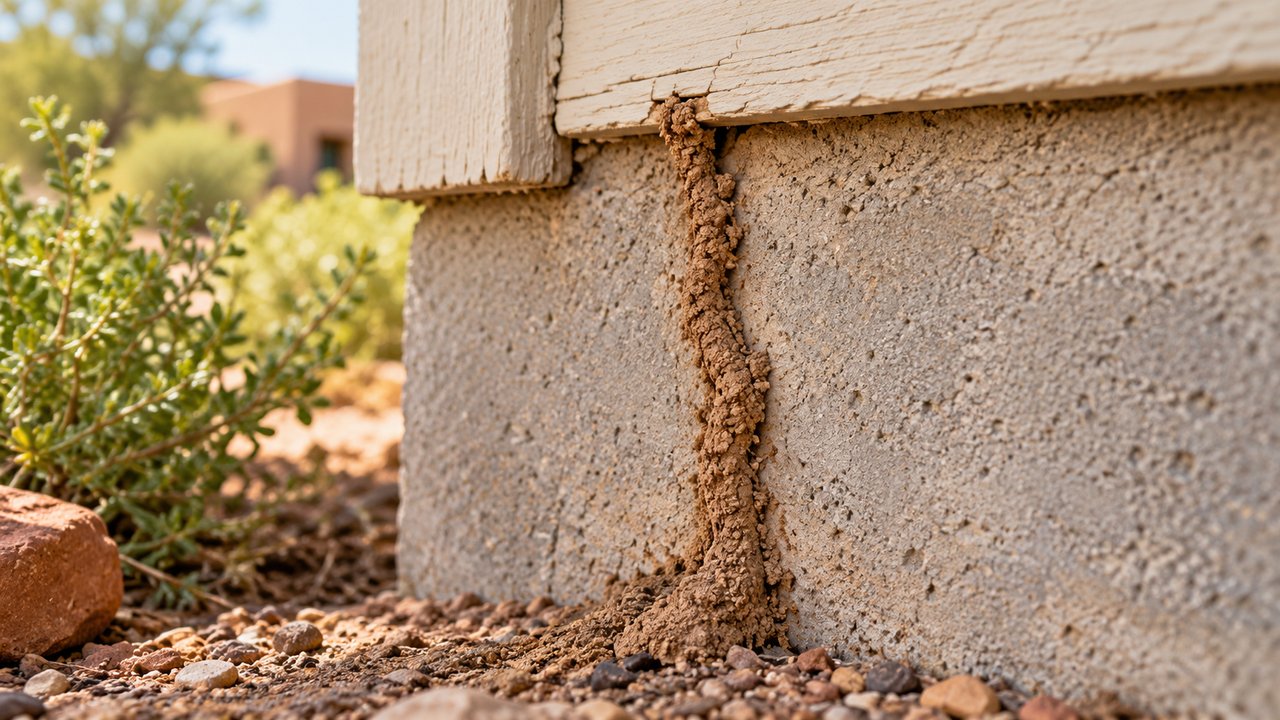
Explain the original location of wings or tubes
Wings beside a window, a suspected tube near a foundation and damaged trim are different clues.
Describe them separately rather than using termite damage as a label for every unusual mark around the house.
Record whether evidence is fresh, whether you have seen it return, and whether it appeared during construction or after moving belongings.
Keep a safe photograph of the surrounding area as well as the detail.
Do not break open a wall or probe a questionable structural component based on a general article.
The inspection can establish what is accessible, what remains concealed and which evidence supports the proposed next step.
If the building condition appears unsafe, arrange suitable building assessment independently of pest identification.
Inspection, treatment and a formal report are different
An owner asking about suspected activity may need an accessible pest inspection.
A buyer, lender or transaction may require a particular formal report.
Say which purpose applies before arranging the appointment so the requirement can be discussed.
A treatment proposal follows the identification and findings.
It should explain the method, relevant areas, preparation and follow-up, rather than present one universal approach for every building or termite type.
NMDA provides New Mexico guidance on suspected termites and checking professional qualifications.
Ask about the relevant service category and the documentation needed for your situation.
A website's general service description should not be treated as a completed transaction report or an assurance about concealed structural condition.
Make prevention questions practical
EPA's termite guidance identifies moisture management and avoiding inappropriate wood-to-ground contact as prevention considerations.
Look at the ordinary maintenance you can safely observe, such as a recurring leak or stored wood touching the building.
These observations are questions for the assessment, not a diagnosis.
A dry visible surface does not establish what is happening behind it, and removing stored material does not prove an existing colony has been addressed.
Explain scheduled repairs, inaccessible areas and work already completed.
Treatment, drainage changes and structural repairs may need coordination, especially if planned building work will alter access.
Ask which maintenance recommendations should happen first and who is responsible for carrying them out.
Compare a termite quote by its scope
A general pest plan and termite treatment should not be assumed to cover the same work.
Ask whether the proposal includes inspection, the selected control method, monitoring, follow-up and any formal reporting you need.
Repairing damaged wood is a separate question.
Confirm who evaluates the damage and whether treatment needs to be coordinated with repairs.
Do not infer structural soundness from a treatment completion alone.
If an agreement includes a warranty or continuing inspection arrangement, read the actual terms.
Ask what is covered, what maintenance conditions apply and what additional charges may arise.
This article does not invent a standard guarantee or a company price because those details depend on the written service agreement.
Use the next sighting to improve the assessment
Keep a simple dated record of what you observed and the original location.
Include changes in weather or building work where they help describe the event, without treating them as proof of the cause.
After inspection or treatment, follow the provided monitoring and reporting instructions.
Explain new evidence that appears elsewhere or at a different time.
The information can help determine whether another assessment or a change in scope is appropriate.
You do not have to identify a termite species before calling.
Describe the wings, insects, tubes or wood concern and the physical service address.
The useful decision is whether appropriate assessment is needed, not whether an online calendar calls the current week termite season.
Your practical checklist
- Record the date and original evidence location
- Compare whole insect features where safe
- Keep indoor and outdoor sightings separate
- Explain construction or moisture changes
- State any formal report requirement
- Compare treatment, monitoring and repair scope
- Follow the actual reporting instructions
Prepare an informed service enquiry
A useful enquiry explains the original activity, the property type, and how often it has appeared.
Include any recent maintenance, deliveries, travel, or product use that relates to the concern.
Have the address and access arrangements ready.
For rental or shared properties, identify the person who can authorize the work and coordinate relevant spaces.
Ask what the inspection can establish, which areas are accessible, and what limitations apply.
Confirm the treatment scope, preparation, follow-up, and separately quoted work before making a decision.
Common questions
Is there one exact termite season for Albuquerque?
No single calendar window establishes whether your property has termites.
Species, conditions and actual evidence guide an assessment.
Does an outdoor swarm mean the house is infested?
Not by itself.
Describe the location and any evidence at the building so suitable inspection questions can be considered.
Can a general pest visit provide my transaction report?
State the formal requirement before booking.
Confirm whether the needed inspection and report can be arranged.
Does termite treatment repair damaged wood?
No.
Structural condition and repairs require an appropriate separate assessment unless explicitly included in the agreed scope.
Sources and further reading
Public sources checked October 11, 2026.
Sources from other regions support general pest guidance; they do not establish Albuquerque infestation rates.