What this guide helps you decide
Understand ant trails, food and moisture, colony activity, and why repeated surface spraying may miss the problem.
Use the guidance to record useful evidence and prepare questions.
The actual pest, property, product, and treatment method determine what applies to your situation.
A trail is only part of the colony
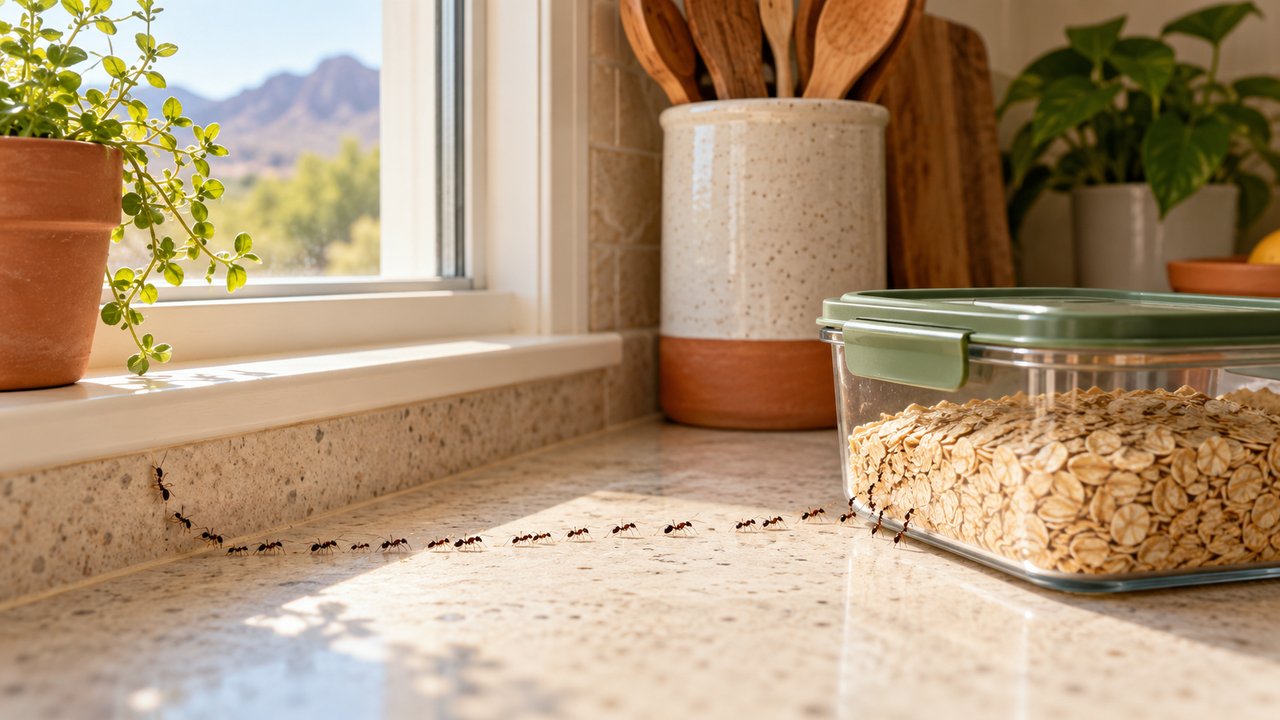
Visible workers may be moving between a nest and a resource.
Removing those workers does not automatically address the rest of the colony.
The nest may be outdoors, within a structure, or in another sheltered location.
Species and behavior affect what should be inspected.
Record where the trail starts and disappears.
A photograph of the route can be more useful than a close picture with no location context.
Food and moisture can change the pattern
Crumbs, spills, open food, pet bowls, and moisture can attract activity.
The relevant resource may be small or intermittently available.
A leak below a sink and food residue on a counter deserve separate attention.
Correct the condition without assuming it is the only cause.
Outdoor plants and other food sources can influence the colony as well.
An indoor-only view may leave an important part of the problem unexplained.
Bait performance is not universal
University guidance explains that bait effectiveness varies with the ant species, bait material, and competing food.
A product that is ignored cannot perform its intended role.
A bait is not simply another surface spray.
Its use and placement must follow the label, and adding other products nearby can interfere with the selected approach.
Do not mix homemade pesticide formulas or change application rates.
If a method is not working, reassess identification and conditions rather than increase exposure.
Repeated spraying may hide useful evidence
A spray can change visible activity without demonstrating that the colony has been addressed.
New routes or continued foraging may still appear.
Before an inspection, explain what products you applied and where.
This information helps the provider interpret the current pattern.
Routine cleaning remains useful, but coordinate it with any treatment placement instructions.
Do not wash away a placement or add products without discussing it.
Entry-point work needs a real target
Thresholds, window edges, utility penetrations, and wall joints may provide routes.
A targeted inspection can identify which openings matter.
Do not close necessary drainage or ventilation because insects are nearby.
Repair and exclusion should preserve the building's function.
For apartments, shared spaces or adjoining units may be relevant.
Notify the manager and clarify who authorizes inspection and repair.
Use a follow-up record
Note whether activity is decreasing, relocating, or recurring around a new resource.
Dates and locations help determine what to inspect next.
Different methods and species have different response times.
An honest service plan explains monitoring without guaranteeing every trail stops immediately.
Ask what the quote covers: identification, relevant interior/exterior areas, treatment, follow-up, and separately quoted maintenance.
A clear scope prevents disappointment.
A returning trail: three different possibilities
Imagine a trail appears beside the sink each morning.
Food or moisture may be attracting workers, an outside colony may be supplying them, or treatment may have changed the visible route without resolving the source.
These are possibilities to investigate, not conclusions about your kitchen.
Record where the trail enters and where it disappears, and explain any recent products or repairs.
If the pattern moves to another cabinet, include that change.
A fresh location can help the inspection more than repeatedly applying the same product along the old route.
Questions that improve an ant quote
Ask what identification is needed, whether exterior assessment is included, and how the selected method will be monitored.
Discuss relevant food, leak, and access recommendations.
If bait is planned, ask how to protect it from pets and children and how routine cleaning fits the placement.
If another method is planned, ask for its specific precautions.
The important distinction is between removing visible activity and assessing the conditions sustaining it.
A clear quote explains the intended scope without promising that every ant in the surrounding landscape will disappear.
Your practical checklist
- Photograph the trail before disturbing it
- Seal food and manage accessible spills
- Check the affected area for leaks
- List products already applied
- Keep treatment placements undisturbed as instructed
- Record changes after service
Prepare an informed service enquiry
A useful enquiry explains the original activity, the property type, and how often it has appeared.
Include any recent maintenance, deliveries, travel, or product use that relates to the concern.
Have the address and access arrangements ready.
For rental or shared properties, identify the person who can authorize the work and coordinate relevant spaces.
Ask what the inspection can establish, which areas are accessible, and what limitations apply.
Confirm the treatment scope, preparation, follow-up, and separately quoted work before making a decision.
Common questions
Why do ants ignore a bait?
Species, bait suitability, placement, and other food sources can affect attraction.
Reassessment is more useful than guessing.
Does a clean kitchen prevent every ant?
No.
Cleaning removes attractions, but colonies and access routes may remain.
Are ants damaging my home?
Do not assume damage from a trail alone.
Species and physical evidence need assessment.
Sources and further reading
Public sources checked October 9, 2026.
Sources from other regions support general pest guidance; they do not establish Albuquerque infestation rates.